
Choosing a small inverter microwave can feel more complicated than it should, especially when every dimension, power rating, and countertop space seems to narrow the choice. This guide brings the decision into focus without overwhelming you with technical jargon. It explains what to compare, how to judge a model’s fit, and which questions are worth asking before purchase. You’ll also find practical buying tips for balancing performance, convenience, durability, and budget, plus a comparison table that makes differences easier to scan. Whether you are replacing an older appliance, planning a compact kitchen, or seeking an intuitive cooking routine, the goal is simple: choose an option that suits your space, habits, and expectations. Slow down, check the details that are easy to overlook, and make a confident decision built around real everyday needs rather than persuasive packaging or unfamiliar specifications. Take a moment to compare, test, and confirm your choice carefully.
Top 10 Small Inverter Microwave Compared
| Image | Product | Highlights | Check Price |
|---|---|---|---|

|
COMFEE 0.7 Cu.Ft. 700W Countertop Microwave with ECO Mode |
|
Check Price |

|
Panasonic NN-SN686S 1.2 Cu.Ft. 1200W Inverter Microwave |
|
Check Price |
|
Toshiba 1.6 Cu.Ft. Inverter Countertop Microwave |
|
Check Price |

|
Toshiba 1.3 Cu.Ft. 1200W Flatbed Inverter Microwave |
|
Check Price |

|
LG NeoChef 0.9 Cu.Ft. 1000W Smart Inverter Microwave |
|
Check Price |

|
Breville BMO850BSS 1.1 Cu.Ft. Smooth Wave Microwave |
|
Check Price |

|
Toshiba 2.2 Cu.Ft. 1200W Inverter Countertop Microwave |
|
Check Price |
|
LG 1.5 Cu.Ft. 1200W Smart Inverter Sensor Microwave |
|
Check Price |

|
Panasonic NN-SN97JS 2.2 Cu.Ft. Cyclonic Wave Microwave |
|
Check Price |

|
Panasonic NN-SN67QS 1.2 Cu.Ft. 1250W Inverter Microwave |
|
Check Price |
Table of Contents
- 1. COMFEE 0.7 Cu.Ft. 700W Countertop Microwave with ECO Mode
- 2. Panasonic NN-SN686S 1.2 Cu.Ft. 1200W Inverter Microwave
- 3. Toshiba 1.6 Cu.Ft. Inverter Countertop Microwave
- 4. Toshiba 1.3 Cu.Ft. 1200W Flatbed Inverter Microwave
- 5. LG NeoChef 0.9 Cu.Ft. 1000W Smart Inverter Microwave
- 6. Breville BMO850BSS 1.1 Cu.Ft. Smooth Wave Microwave
- 7. Toshiba 2.2 Cu.Ft. 1200W Inverter Countertop Microwave
- 8. LG 1.5 Cu.Ft. 1200W Smart Inverter Sensor Microwave
- 9. Panasonic NN-SN97JS 2.2 Cu.Ft. Cyclonic Wave Microwave
- 10. Panasonic NN-SN67QS 1.2 Cu.Ft. 1250W Inverter Microwave
Top 10 Small Inverter Microwave Reviewed
A small inverter microwave is popular because it combines a compact footprint with cooking control that suits quick, everyday meals. It is especially useful for individuals, dorm rooms, offices, apartments, and anyone who regularly reheats food or prepares drinks. In this Top 10 small inverter microwave review, readers can expect carefully compared top-rated picks, practical buying guidance, and a clearer view of which options fit different spaces, routines, and budgets.
1. COMFEE 0.7 Cu.Ft. 700W Countertop Microwave with ECO Mode
A cramped kitchen counter does not have to force you into a tiny microwave or a frozen dinner every night. The COMFEE 0.7 Cu.Ft. 700W Countertop Microwave with ECO Mode takes up modest space while handling everyday reheats, quick lunches, and simple frozen meals. It is a practical answer for dorm rooms, apartments, offices, and busy counters where useful capacity matters more than a large door.
For regular use, the 0.7-cubic-foot cavity is easier to maneuver than a full-size unit, especially when checking a mug or heating a small plate. ECO Mode can reduce energy use during standby, and the black exterior should blend into a utilitarian kitchen without looking overly industrial. The controls are straightforward, so this model suits anyone wanting basic operation without navigating a complicated programming interface.
Real-life performance centers on convenience rather than premium features. At 700 watts, it is best for small portions and not intended to replace a higher-powered family microwave. The compact footprint is the standout benefit, particularly for renters or anyone clearing limited counter space. It also makes a sensible secondary microwave for warming beverages, melting butter, or preparing a quick meal without occupying the main appliance.
- Compact 0.7-cubic-foot footprint
- 700 watts for everyday reheating
- ECO Mode supports lower standby energy use
- Simple controls suit quick tasks
- Black finish works in utilitarian spaces
- Easy to move when counter space changes
- Small cavity limits larger plates and bowls
- Lower power takes longer for frozen meals
Get the COMFEE 0.7 Cu.Ft. 700W Countertop Microwave with ECO Mode now:
2. Panasonic NN-SN686S 1.2 Cu.Ft. 1200W Inverter Microwave
The Panasonic NN-SN686S is ideal for home cooks who want a compact stainless microwave that still delivers full-size power. Its 1.2-cubic-foot cavity is large enough for mugs, bowls, and moderate plates without taking up an oversized counter footprint. The 1200-watt inverter system and Genius Sensor make it especially appealing to anyone tired of reheated food drying at the edges before the center warms.
Compared with ordinary reheating, inverter technology adjusts power over time instead of switching a fixed full-power setting on and off. That approach is particularly useful for softer foods such as soup, rice, casseroles, and frozen entrees where gentle delivery helps preserve moisture. The stainless finish also suits newer kitchens, while the sensor-driven options reduce guesswork for users who do not remember recommended cook times.
This model is best for couples, frequent lunch reheaters, and cooks who value convenience over specialty programs. Its combination of strong output, moderate internal capacity, and precise heating makes it feel more capable than its footprint suggests. Be sure to measure the intended counter or cabinet opening and follow the manual for ventilation and any built-in trim requirements before purchase.
- Powerful 1200-watt inverter system
- Genius Sensor simplifies common foods
- 1.2-cubic-foot cavity suits everyday dishes
- Stainless finish coordinates with modern appliances
- Flexible countertop or built-in positioning
- Gentler reheating than fixed-power microwaves
- Larger than an ultracompact dorm model
- Built-in placement requires careful clearance planning
Get the Panasonic NN-SN686S 1.2 Cu.Ft. 1200W Inverter Microwave now:
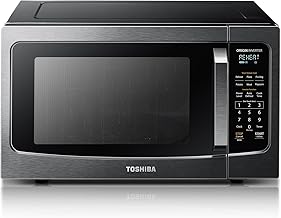
3. Toshiba 1.6 Cu.Ft. Inverter Countertop Microwave
The defining feature of the Toshiba 1.6 Cu.Ft. Inverter Countertop Microwave is inverter technology, which is a meaningful upgrade over a basic microwave that blasts food at full power in uneven bursts. Rather than simply cycling on and off, inverter power ramps down and up as needed. For a countertop model, this combination of moderate capacity and controlled heating is especially useful for preparing everything from reheated rice to frozen meals.
At 1.6 cubic feet, the cavity offers more room than typical compact models, making it useful for larger bowls and side dishes without moving to a full family-size appliance. The wider working area also gives food room to heat more evenly, especially when a plate needs to be turned midway. That balance makes the Toshiba practical for apartments, condos, and medium-sized kitchens.
Cooks who often serve several people or batch cook will appreciate the extra capacity but should still expect a countertop footprint larger than a 0.7-0.9-cubic-foot model. The inverter system is the main reason to choose it over similarly sized conventional microwaves because it supports gentler reheating and more even defrosting. It is a strong pick when controlled performance matters but minimalist design is the priority.
- Inverter heating adjusts power as food cooks
- Roomy 1.6-cubic-foot interior
- Supports more even reheating and defrosting
- Enough room for larger bowls and side dishes
- Balanced size for apartments and condos
- Uses more counter space than a truly compact microwave
Get the Toshiba 1.6 Cu.Ft. Inverter Countertop Microwave now:
4. Toshiba 1.3 Cu.Ft. 1200W Flatbed Inverter Microwave
Unlike many similarly priced microwaves, the Toshiba 1.3 Cu.Ft. 1200W Flatbed Inverter Microwave has a flatbed cavity, so there is no round turntable to reposition or wash after reheating a large plate. That design solves a surprisingly common annoyance: uneven access caused by food sitting off-center. It is particularly helpful for rectangular containers, wide pizza slices, and awkward serving dishes while keeping the controls and door layout familiar.
The 1200W rating gives this flatbed model enough power for quick weekday reheating and more capable cooking than compact 700-900-watt units. At 1.3 cubic feet, it sits between a tiny dorm microwave and a very large family model. Its flat floor can make loading multiple mugs easier, although users must account for a fixed heating pattern rather than relying on a rotating plate.
It is a good match for busy people who want sensible capacity without a complicated layout. The lack of a turntable also removes one movable component, although crumbs can still collect across the broad flatbed surface. Wipe spills promptly and use a microwave-safe cover when reheating saucy foods. Overall, the design is more distinctive than decorative and should appeal to anyone who values easier loading and cleanup.
- Flatbed design eliminates turntable repositioning
- 1200 watts supports fast everyday cooking
- 1.3-cubic-foot cavity balances space and capacity
- Easier loading for rectangular dishes
- Fewer movable parts to clean
- Inverter control supports gentler heating
- Larger than the smallest dorm microwaves
- Fixed flatbed pattern can still need food rotation
Get the Toshiba 1.3 Cu.Ft. 1200W Flatbed Inverter Microwave now: (See Also:Best Interior Microwave Paint Reviews)
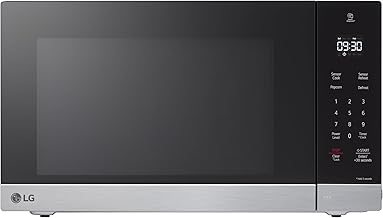
5. LG NeoChef 0.9 Cu.Ft. 1000W Smart Inverter Microwave
Picture someone heating soup at 6:30 p.m. between dinner prep and a video call without clearing a large appliance off the counter. The LG NeoChef 0.9 Cu.Ft. 1000W Smart Inverter Microwave fits that task well; its compact stainless body is still substantial enough to look like a proper kitchen microwave. Smart Inverter control and 1000-watt power make it a capable choice for reheats, beverages, and smaller portions.
At 0.9 cubic feet, the NeoChef offers more usable room than the smallest dorm models but requires less counter space than many 1.2-cubic-foot options. That makes it a natural fit for a city apartment, first kitchen, or office break room. The sensor and auto-cook features are more helpful than decorative for users who want consistent results from packaged food or reheated leftovers.
It will not replace a large built-in for a roasting pan, but it handles the everyday jobs that dominate small microwave use. A 1000-watt inverter is a useful middle ground for gentler reheating than a low-watt unit while remaining fast enough for frozen meals. The stainless finish coordinates easily with modern appliances, making this LG especially attractive when both function and appearance count.
- Compact 0.9-cubic-foot capacity
- 1000 watts for capable everyday use
- Smart Inverter supports controlled reheating
- Sensor and auto-cook options aid consistency
- Stainless finish suits modern kitchens
- Useful size for apartments and offices
- Too compact for large serving dishes
- Not designed for built-in roasting pans
Get the LG NeoChef 0.9 Cu.Ft. 1000W Smart Inverter Microwave now:
6. Breville BMO850BSS 1.1 Cu.Ft. Smooth Wave Microwave
The Breville BMO850BSS makes a strong case for spending more when a microwave will be used daily. For the price, you get Smooth Wave inverter heating, multiple power levels, sensor-assisted presets, and a polished stainless exterior rather than a basic plastic-bodied appliance. The result is an attractive, versatile countertop unit aimed at cooks who care about control, convenience, and a more refined kitchen appearance.
Smooth Wave technology is the real value here because it reduces the harsh on-off cycling associated with many standard microwaves. That can make reheated pizza, rice, and sauces taste more evenly finished. The controls are more extensive than a basic model, so new users can start with presets while experienced cooks adjust time or power themselves. It feels premium without requiring specialty functions.
That premium construction and finish are best suited to a visible kitchen spot, not a cramped rental counter. It is also a good pick for reheating quality a compact premium model because inverter delivery helps dried edges become less likely. Remember that the highest wattage figure does not tell the whole story, and compare internal capacity, door size, controls, and turntable fit against your usual dishes.
- Smooth Wave inverter heating improves control
- Multiple power levels for precise cooking
- Sensor-assisted presets simplify common tasks
- Polished stainless steel looks upscale
- Versatile enough for varied daily foods
- Strong reheating performance
- Premium price exceeds basic microwave models
- Its 1.1-cubic-foot cavity needs counter space
Get the Breville BMO850BSS 1.1 Cu.Ft. Smooth Wave Microwave now:
7. Toshiba 2.2 Cu.Ft. 1200W Inverter Countertop Microwave
When a family finishes dinner with a casserole, leftovers, and a drink to warm, a tiny microwave can turn cleanup into several crowded batches. The Toshiba 2.2 Cu.Ft. 1200W Inverter Countertop Microwave addresses that frustration with a roomy cavity and stronger output. It is a better fit for households that move bowls and plates, even though it occupies more counter space than a compact model.
Inverter technology helps this larger Toshiba manage reheating and defrosting with more precision than a straightforward full-power on/off system. The 1200-watt rating should suit everyday frozen entrees, soups, and multi-servings, while the 2.2-cubic-foot interior gives food additional space to sit naturally. That combination is especially valuable for busy cooks who prefer fewer reheating cycles and more even results.
The tradeoff is obvious: its footprint. It will not suit a narrow kitchen designed around a 0.7-cubic-foot appliance, so measure before shopping. Even so, the added capacity can replace a separate toaster oven for many basic heating tasks, while the stainless exterior and modern controls suit a primary family appliance position. It is ideal when cooking for more than one or two people.
- Large 2.2-cubic-foot cavity reduces crowding
- 1200-watt power handles everyday meals
- Inverter technology improves heating control
- Useful for casseroles, bowls, and family portions
- Can reduce the need for reheating batches
- Stainless finish suits a primary appliance position
- Large countertop footprint
- Overkill for a single user or tiny kitchen
Get the Toshiba 2.2 Cu.Ft. 1200W Inverter Countertop Microwave now:
8. LG 1.5 Cu.Ft. 1200W Smart Inverter Sensor Microwave
The LG 1.5 Cu.Ft. 1200W Smart Inverter Sensor Microwave is ideal for families needing one appliance to handle dinner plates, cereal bowls, casseroles, and drinks without feeling cramped. Its 1.5-cubic-foot cavity balances capacity with countertop presence, while 1200 watts supports fast reheating and frozen foods. Sensor cooking reduces guesswork, making it convenient for busy shared kitchens and households that regularly prepare larger portions.
Smart Inverter power is a meaningful advantage for a family microwave because it varies delivery as food thaws or heats, reducing the tendency to overcook edges while the center is still warming. The 1.5-cubic-foot interior provides enough room for common serving dishes without jumping to a very bulky 2-cubic-foot model. That positioning makes it versatile for daily use from breakfast to late snacks.
It is not ideal for a tiny apartment counter or for someone who only reheats a single mug and wants maximum space savings. In exchange, the stainless finish, sensor presets, and strong power make it a dependable central appliance for a busy household. Measure cabinet space, leave ventilation room, and consider the handle and door swing before ordering.
- Generous 1.5-cubic-foot interior
- 1200 watts for fast family-size reheating
- Smart Inverter varies power during cooking
- Sensor cooking reduces manual guesswork
- Stainless exterior complements modern kitchens
- Balanced size for everyday household use
- Larger than an apartment-sized microwave
- May be excessive for a single-user kitchen
Get the LG 1.5 Cu.Ft. 1200W Smart Inverter Sensor Microwave now:
9. Panasonic NN-SN97JS 2.2 Cu.Ft. Cyclonic Wave Microwave
The standout feature of the Panasonic NN-SN97JS 2.2 Cu.Ft. Cyclonic Wave Microwave is Cyclonic Wave technology, which circulates microwave energy through the cavity for more even coverage than a conventional system. Paired with inverter power and a Genius Sensor, it is built for cooks who want precise results on large or irregularly shaped dishes. This is especially useful when reheating a family-size casserole or defrosting something that cannot be flipped. (See Also:Best Umc5225gz Microwave Reviews)
At 2.2 cubic feet and 1250 watts, this Panasonic has room and power for busy meal preparation. The cyclonic arrangement is meant to reduce dependence on rotating food or physically moving a container to the exact center, a benefit for broad platters, round bowls, and frozen foods. Sensor cooking further simplifies common tasks by estimating cooking time from the food and load rather than relying solely on guesswork.
The tradeoff is size and price: this is a substantial countertop model for users seeking a small inverter microwave. Its appeal strengthens when it will serve several people daily or reduce reliance on a second heating appliance. Stainless steel fits a modern kitchen, but buyers should verify counter depth, door clearance, and ventilation before installation.
- Cyclonic Wave promotes even heating coverage
- Inverter technology for controlled cooking
- 1250 watts handle demanding everyday meals
- 2.2-cubic-foot cavity fits broad dishes
- Genius Sensor reduces timing guesswork
- Useful for families and shared kitchens
- Large countertop footprint
- Premium feature set may be unnecessary for small portions
Get the Panasonic NN-SN97JS 2.2 Cu.Ft. Cyclonic Wave Microwave now:
10. Panasonic NN-SN67QS 1.2 Cu.Ft. 1250W Inverter Microwave
Many basic microwaves heat with harsh bursts that can leave the edges of a plate hot and dry while the center remains lukewarm. The Panasonic NN-SN67QS 1.2 Cu.Ft. 1250W Inverter Microwave is a strong alternative because inverter technology reduces power as needed, helping heat move more evenly. Genius Sensor estimates cooking time, so cooks do not have to interrupt reheating to rotate, stir, and guess again.
At 1.2 cubic feet, the Panasonic keeps a manageable footprint for apartments and medium counters while offering 1250 watts enough punch for frozen meals, soups, and reheated dinner plates. The stainless exterior gives it a more permanent appliance feel than a small dorm unit, and the relatively high power is useful when you do not want to wait between batches.
It is a particularly good fit for one or two people who cook several nights a week and value repeatability over specialty modes. The sensor can simplify leftovers, vegetables, beverages, and packaged foods, while inverter control makes manual adjustments more forgiving. It may be more than necessary for a solo user who only reheats coffee, but it is well proportioned for everyday kitchen work.
- 1250-watt power for quick reheating
- Inverter control reduces harsh heating cycles
- Genius Sensor estimates cooking time
- 1.2-cubic-foot size fits medium counters
- Stainless exterior suits a permanent kitchen setup
- Helpful for leftovers, soups, and frozen foods
- Larger than an ultracompact personal microwave
Get the Panasonic NN-SN67QS 1.2 Cu.Ft. 1250W Inverter Microwave now:
A Complete Guide to Buying Small Inverter Microwave
1. What Is a small inverter microwave?
A small inverter microwave is a compact countertop oven that uses inverter power control to adjust cooking output more continuously than a unit that simply cycles full power on and off. That approach can make reheating, defrosting, and melting more even, particularly with smaller portions. It is useful for quick meals, leftovers, drinks, and dorm or office routines, especially when full countertop capacity is unnecessary.
These appliances suit people with limited kitchen space, frequent travelers, small households, or anyone who wants an everyday microwave without giving up oven-style cooking. They are not ideal when you routinely prepare large dishes, need high-output tasks, or expect a full-size replacement for a family oven.
2. Key Features That Actually Matter
Everyday performance matters more than a long specification sheet. In use, check whether the controls suit your usual portions and whether the unit handles repeated reheats, frozen foods, and beverages without slow or uneven results.
- Test the stated capacity against your normal container sizes, because nominal capacity does not always indicate the usable interior room.
- Look for a sturdy door, responsive keypad, readable display, and smooth-turntable movement, since these parts affect daily use.
- A simple setup and easy-to-clean surfaces reduce friction, while a removable or accessible turntable makes routine maintenance less awkward.
- Measure the full countertop footprint, wall clearance, ventilation space, and door swing before buying, not just the advertised width.
- Compare total ownership cost, including installation needs, replacement parts, and expected service, rather than focusing only on the purchase price.
- Research support coverage, repair access, and the manufacturer’s track record, because reliability is more valuable than an impressive but unsupported claim.
- Confirm the electrical and ventilation requirements match your existing setup, especially in older homes, offices, and shared spaces.
3. How to Choose the Right small inverter microwave
Start with your actual routine: single-person reheating and beverage preparation call for less capacity than family meal cooking. Set a budget that includes delivery, installation, ventilation, and accessories. Then compare the Top 10 list by size, controls, power, cooking functions, and expected reliability.
Keep expectations realistic. A compact model may be excellent for fast weekday tasks yet less suitable for long batches, heavy dishes, or simultaneous cooking. Choose the model that solves the jobs you do most often, and accept a trade-off when it does not solve a task you rarely perform. (See Also:Best Dacor Microwave Dcm24s Reviews)
4. Common Buyer Mistakes to Avoid
Many buying errors come from comparing headline wattage, ignoring fit, or treating a small appliance as if it were a full-size oven. Avoiding these traps prevents costly returns and disappointing daily use.
- Ignoring measurements can block ventilation or leave no room to open the door, so measure the installation area first.
- Overestimating capacity can make it hard to fit a casserole or tall mug, so bring the dimensions of your usual dishes.
- Believing every listed function will be used can push you toward a costlier model, so prioritize controls that improve your routine.
- Skipping power and electrical checks can lead to slower cooking or compatibility issues, so verify the circuit and the appliance’s requirements.
- Reading only the lowest price can hide repair, parts, or service concerns, so compare warranty terms and long-term support.
- Expecting perfect results from a compact unit can create frustration, so test portions, cook times, and reheating habits before committing.
Frequently Asked Questions About Small Inverter Microwave
Does a small inverter microwave replace a full-size oven?
A small inverter microwave can handle many reheating, defrosting, and simple cooking tasks, but it is not a direct substitute for every full-size oven. Choose one for leftovers, drinks, and small portions; keep a larger appliance for batch cooking, heavy dishes, or simultaneous meals.
Will a compact microwave fit my countertop and cabinets?
Measure the appliance width, depth, height, door swing, and required ventilation clearance before ordering. Leave room for cords and nearby cabinets, and check that the controls can be reached comfortably. Installation requirements vary, so read the manual and confirm electrical compatibility with the location.
Is a small inverter microwave easy for beginners to use?
Most units are designed for quick, repeatable tasks, so look for clearly labeled controls, a readable display, and settings that match your usual portions. A short learning curve is common, especially with combination cooking. Before buying, imagine reheating a meal and preparing a drink in the order you normally use them.
How do I judge capacity for everyday cooking?
Capacity is best judged by usable interior space and the size of your dishes, not by a round number on the box. Compare the turntable, door opening, and height needed for a tall mug or casserole. Smaller units are convenient for individuals but may struggle with larger portions.
What quality details should I inspect before buying?
Inspect the door hinges, keypad, display, turntable, and interior for solid construction and smooth operation. A responsive keypad and a door that closes cleanly are useful daily quality signals. Also consider how easily surfaces can be cleaned and whether replacement parts and service support are accessible.
How reliable are these compact microwaves over time?
Reliability depends on matching the unit to your usage, ventilation, and maintenance habits, not on a brand name alone. Look for clear warranty terms, available parts, and a proven support process. Clean spills promptly, avoid blocking vents, and follow loading guidance to reduce avoidable wear.
Is a budget model worth the savings?
A lower price can be sensible when you need reheating, defrosting, and beverage preparation, but extra spending does not guarantee better results for everyone. Compare essential functions, fit, controls, warranty, and service rather than relying on discounts. The best value is the option that covers your routine comfortably.
Final Verdict
The best small inverter microwave is the one that fits your available space, handles the meals you prepare most often, and offers controls you will genuinely use. Use the comparison table to narrow the field, then check ventilation, electrical requirements, capacity, warranty, and maintenance needs before deciding. A smaller appliance can be a practical choice for quick routines, but it should complement—not simply imitate—a full-size kitchen setup. Choose confidently based on everyday priorities rather than the longest feature list or the lowest purchase price.