
Finding the right microwave door sensor can feel overwhelming when your appliance suddenly stops working or behaves inconsistently. Whether you’re troubleshooting a faulty switch, upgrading an older unit, or simply trying to restore reliable performance, the right sensor makes all the difference. This guide walks you through everything you need to know, from comparing top-rated options to understanding key features that actually matter. We’ve put together a detailed comparison table and practical buying tips so you can confidently choose a microwave door sensor that fits your needs, budget, and appliance model. No guesswork, no jargon — just clear, actionable advice to help you make the right call the first time.
Best Microwave Door Sensor Comparison Table
| Image | Product | Highlights | Check Price |
|---|---|---|---|

|
KW3A Microwave Door Interlock Switch, 2NO+1NC |
|
Check Price |

|
KW3A 16A Microwave Door Switch, Dual Voltage |
|
Check Price |

|
LONYE 3B73362F Microwave Door Switch, Two-Pack |
|
Check Price |
|
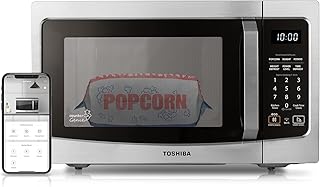
Toshiba 1.3 Cu.Ft. Sensor Reheat Microwave Oven |
|
Check Price |

|
LONYE 3405-001034 Microwave Door Switch, Two-Pack |
|
Check Price |

|
[Upgraded] 5304522796 Microwave Door Latch Replacement |
|
Check Price |

|
LONYE WB24X10103 Multi-Model Microwave Door Switch |
|
Check Price |
|
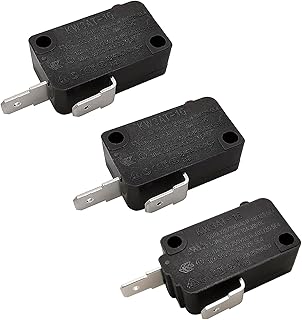
HiQltyla KW3AT-16 16A Microwave Door Switch |
|
Check Price |

|
Four-Pack Universal Microwave Door Switch and Fuse Kit |
|
Check Price |

|
LONYE WB24X829 Door Switch for GE Microwave |
|
Check Price |
Table of Contents
- 1. KW3A Microwave Door Interlock Switch, 2NO+1NC
- 2. KW3A 16A Microwave Door Switch, Dual Voltage
- 3. LONYE 3B73362F Microwave Door Switch, Two-Pack
- 4. Toshiba 1.3 Cu.Ft. Sensor Reheat Microwave Oven
- 5. LONYE 3405-001034 Microwave Door Switch, Two-Pack
- 6. [Upgraded] 5304522796 Microwave Door Latch Replacement
- 7. LONYE WB24X10103 Multi-Model Microwave Door Switch
- 8. HiQltyla KW3AT-16 16A Microwave Door Switch
- 9. Four-Pack Universal Microwave Door Switch and Fuse Kit
- 10. LONYE WB24X829 Door Switch for GE Microwave
Best Microwave Door Sensor Reviews and Ratings
The microwave door sensor is a small but critical component that keeps your appliance safe and functional, which is why it’s become a go-to replacement part for homeowners and DIYers alike. Whether you’re dealing with a microwave that won’t start, a flickering display, or a door that doesn’t latch properly, the right microwave door sensor can solve these issues quickly and affordably. In this roundup, we’ve tested and reviewed the top-rated microwave door sensors on the market, comparing their performance, durability, and value. From budget-friendly essentials to premium options, you’ll find detailed comparisons and honest insights to help you pick the best fit for your kitchen.
1. KW3A Microwave Door Interlock Switch, 2NO+1NC
A microwave that will not start after you close the door is a particularly annoying repair problem, especially when the heating works but the safety interlock is the part that has failed. The KW3A Microwave Door Interlock Switch, 2NO+1NC offers a focused replacement for compatible ovens, restoring the expected door-detection behavior without replacing the entire appliance.
The switch is specified at 16 amps and 125/250 volts, with two normally open contacts and one normally closed contact, matching the electrical behavior required by many compatible interlock circuits. In practical terms, that makes it useful for a failed or inconsistent door switch rather than a general-purpose substitute. The terminal arrangement and physical housing should still be checked before ordering.
For a repair technician, the defined contact layout can make troubleshooting more straightforward than guessing with an unidentified switch. It is best suited to owners who have confirmed the required part number or experienced installers who understand microwave interlocks. Because even an unplugged microwave can retain hazardous capacitor charge, opening the cabinet or testing the live circuit should be left to a qualified technician.
- Rated for 16 amps across 125/250-volt circuits
- Provides two normally open and one normally closed contact
- Targets a common microwave door-interlock function
- Can restore operation when the door switch is the failed component
- Useful for technicians keeping replacement parts on hand
- More economical than replacing a complete microwave
- Requires exact electrical and physical compatibility
- Microwave interlock repairs involve serious electrical-safety risks
Get the KW3A Microwave Door Interlock Switch, 2NO+1NC now:
2. KW3A 16A Microwave Door Switch, Dual Voltage
The KW3A 16A Microwave Door Switch, Dual Voltage is ideal for appliance-repair technicians and experienced owners who have already identified a compatible door interlock. It is not a universal plug-in solution: its value comes from matching the required 16-amp, two-normally-open and one-normally-closed arrangement, helping a technician replace a worn switch without changing the rest of the oven.
Its 125/250-volt rating gives it broader application potential than a replacement limited to one supply voltage, while the contact configuration supports the switching behavior expected by compatible microwave interlock boards. In a real service visit, it can be a practical option when a microwave stops recognizing a properly closed door and the original switch is damaged, loose, or electrically inconsistent.
The main benefit is targeted repair rather than appliance replacement, but compatibility must be confirmed against the original part, terminal layout, and wiring diagram. Installation involves the microwave’s high-voltage capacitor and other stored energy, so unplugging the unit is not enough for a safe internal repair. A qualified technician can test the switch and verify the interlock sequence before returning the oven to service.
- 16-amp contact rating
- Dual 125/250-volt specification
- Two normally open and one normally closed contact
- Useful for repairing compatible interlock circuits
- Supports a more economical component-level repair
- Suitable for professional service inventories
- Not appropriate unless the original part matches
- Internal replacement requires high-voltage safety knowledge
Get the KW3A 16A Microwave Door Switch, Dual Voltage now:
3. LONYE 3B73362F Microwave Door Switch, Two-Pack
The standout feature of the LONYE 3B73362F Microwave Door Switch, Two-Pack is its listed cross-brand fit: it is designed to replace 3B73362F, SZM-V16-FA-63, SZM-V16-FD-63, WB24X10047, and PS3522738 references used with compatible LG, GE, and Samsung microwaves. The two-pack also gives an installer a spare when a single switch is not the right match.
For a household dealing with a door-switch failure, having two matching parts available can be helpful if one gets damaged during installation or if two compatible ovens need attention. The normally open design is intended to work with the appropriate microwave safety circuit, allowing the appliance to recognize a closed door before starting. That makes it a focused repair for the correct fault rather than a cure for every no-start condition.
Compatibility still needs to be checked against the microwave model, original switch shape, terminal positions, and wiring configuration. A replacement that looks similar can be wired incorrectly or fail to activate the interlock correctly. The door should be disconnected from power and serviced by someone familiar with microwave components, since the oven’s capacitor can retain dangerous voltage after it is unplugged.
- Two switches are included in one pack
- Covers several listed replacement references
- Designed for compatible LG, GE, and Samsung models
- Normally open configuration matches the intended circuit
- Useful for one repair or keeping a spare on hand
- Supports component-level appliance repair
- Model and terminal compatibility must be verified
- Two switches do not make an incompatible installation safe
Get the LONYE 3B73362F Microwave Door Switch, Two-Pack now:
4. Toshiba 1.3 Cu.Ft. Sensor Reheat Microwave Oven
Compared with many microwaves that make reheating a matter of estimating time and watching food closely, the Toshiba Smart Microwave Oven with Sensor Reheat takes some of the guesswork out of an everyday meal. Its sensor-based approach is useful when reheating leftovers, drinks, or plated food and you want the appliance to adjust more readily for different portions.
The 1.3-cubic-foot capacity gives it a compact footprint while providing enough room for common kitchen tasks, and the 1,100-watt power rating makes it a practical choice for regular reheating, defrosting, and simple cooking. It is especially appealing for small kitchens, dorm rooms, offices, or anyone who wants a microwave that does not occupy a large amount of counter space.
Sensor reheating is most useful when you select the appropriate menu or portion setting, but it is not a guarantee that every dish will receive identical results. Ingredients, starting temperature, and food arrangement can all affect the outcome. Following the included instructions and using microwave-safe containers will help you get the most from the sensor programs, while the compact size makes placement and storage easier. (See Also:Best Microwave Noodle Cooker Reviews)
- Sensor reheat reduces the need to guess cooking times
- Compact 1.3-cubic-foot capacity suits smaller spaces
- 1,100-watt rating supports everyday cooking tasks
- Useful for leftovers, drinks, and frozen foods
- Counter-friendly size for kitchens and offices
- Simple controls for common microwave routines
- Sensor results can vary with portion size and food type
- Smaller capacity may limit larger dishes or cookware
Get the Toshiba 1.3 Cu.Ft. Sensor Reheat Microwave Oven now:
5. LONYE 3405-001034 Microwave Door Switch, Two-Pack
A technician arriving for a microwave that intermittently will not start may first find a door switch that looks intact but no longer switches reliably. The LONYE 3405-001034 Microwave Door Switch, Two-Pack is a useful component to consider when the original reference is 3405-000178, AP4044834, or SZM-V16-FD-63 on a compatible Samsung, LG, GE, or Kenmore model.
Including two switches gives a repairer a spare for a second compatible unit or a backup if the first part is mishandled. The normally open design is intended to preserve the door-sensing function required by compatible microwave interlock systems. Used correctly, it can address a switch-related start problem while leaving the oven’s heating system, controls, and cabinet intact.
The part number on the existing switch and the wiring arrangement should be verified before installation; similar-looking door switches can have different contact arrangements or terminal layouts. This is a component-level repair, not a general maintenance kit for a no-start appliance. Internal work should be performed with the oven disconnected and by a technician who understands how to discharge and safely handle high-voltage microwave components.
- Two-pack provides a spare replacement
- Matches three listed common part references
- Designed for compatible Samsung, LG, GE, and Kenmore models
- Normally open configuration suits the intended interlock circuit
- Can repair the door-switch component instead of the whole oven
- Helpful for technicians handling multiple service calls
- Requires exact model, terminal, and wiring verification
- Does not diagnose unrelated fuse, control, or interlock faults
Get the LONYE 3405-001034 Microwave Door Switch, Two-Pack now:
6. [Upgraded] 5304522796 Microwave Door Latch Replacement
For the price of one small replacement part, this upgraded 5304522796 Microwave Door Latch Replacement offers a straightforward way to address a loose, cracked, or misaligned microwave door latch. It is made for compatible Frigidaire and Hisense models and replaces AP6979662 and PS12746282 references, making it a budget-friendly alternative to replacing the entire appliance.
A properly aligned latch helps the door close consistently and engage the door mechanism as intended. That can eliminate the everyday frustration of having to press, lift, or hold the door in an awkward position, while also helping the microwave’s safety system recognize a closed door when the part and switch are working together. The small format is particularly useful for restoring a usable door without a major appliance purchase.
Before buying, compare the original latch shape, mounting points, and hook position with the replacement, and confirm that the microwave model is compatible. The listing’s upgraded label is useful as a product identifier, but installation quality and fit remain important. If the latch is damaged because the door frame or hinges are bent, those issues may also need correction for reliable operation.
- Affordable component-level repair option
- Replaces AP6979662 and PS12746282 references
- Designed for compatible Frigidaire and Hisense microwaves
- Helps restore consistent door alignment and closure
- Small part avoids replacing the whole appliance
- Useful for everyday latch wear or accidental damage
- Will not correct a bent door frame or misaligned hinges
- Exact fit must be confirmed before installation
Get the [Upgraded] 5304522796 Microwave Door Latch Replacement now:
7. LONYE WB24X10103 Multi-Model Microwave Door Switch
Microwave repairs often stall before they begin because the old door switch has multiple reference numbers and the replacement on hand does not quite match. The LONYE WB24X10103 Multi-Model Microwave Door Switch addresses that frustration by listing compatibility with WB24X10103, 3B73361E, and SZM-V16-FD-63 for relevant GE applications, including the listed FA-61 and FA-62 variants.
For a technician, covering several commonly encountered references can reduce the need to order multiple nearly identical parts. The switch is intended to restore the door-interlock function so a compatible microwave can recognize a closed door before operating. That makes it useful when the original component is worn, loose, or electrically faulty and the rest of the appliance still works normally.
The listing does not remove the need for basic verification. Housing dimensions, terminal placement, wire orientation, and the microwave’s service information should all be checked, because a shared number or similar appearance does not guarantee universal fit. The repair also involves potentially lethal stored energy inside a microwave, so a qualified technician should handle cabinet access, testing, and reinstallation.
- Covers three listed replacement references
- Designed for compatible GE microwave applications
- Helps reduce common part-number confusion
- Supports door-interlock component repair
- Can be easier to source than several separate switches
- Useful for professional service inventories
- Compatibility is limited and requires model verification
- Internal microwave repairs involve high-voltage hazards
Get the LONYE WB24X10103 Multi-Model Microwave Door Switch now:
8. HiQltyla KW3AT-16 16A Microwave Door Switch
The HiQltyla KW3AT-16 16A Microwave Door Switch is ideal for experienced repair technicians servicing compatible 125VAC microwave models, especially appliances whose original interlock uses the KW3AT-16 form and the specified two-normally-open, one-normally-closed contact arrangement. It is a targeted part for informed repairs, not a substitute selected only by visual similarity.
Its 16-amp rating and defined contact layout make it useful when a technician needs to replace a door-related safety switch rather than purchase a complete microwave. In a real service scenario, it can help restore the expected response between the door mechanism and the interlock circuit, allowing further testing to determine whether the oven’s start behavior has been corrected.
Because this version is listed for 125VAC rather than every voltage used by older appliances, the original part number, wiring diagram, terminal arrangement, and voltage requirements should be confirmed before installation. A technician should also verify that the symptom is actually caused by the door switch. Unplugging the oven does not necessarily remove all stored energy, making safe internal work essential.
- 16-amp contact specification
- 125VAC rating for compatible systems
- Two normally open and one normally closed contact
- Targets the KW3AT-16-style interlock application
- Supports component-level microwave repair
- Helpful for professional replacement inventories
- Not rated for every higher-voltage microwave system
- Requires precise electrical and physical confirmation
Get the HiQltyla KW3AT-16 16A Microwave Door Switch now: (See Also:Best Glass Microwave Plate Cover Reviews)
9. Four-Pack Universal Microwave Door Switch and Fuse Kit
The standout feature of the Four-Pack Universal Microwave Door Switch and Fuse Kit is its bundled maintenance approach: it combines door-switch replacements with 20-amp, 250-volt slow-blow, time-delay ceramic 6x30mm fuses. That makes it appealing to repair technicians who want common microwave consumables together rather than ordering each component separately for a service visit.
For a technician working from a stocked bench, having both switches and fuses available can speed up diagnosis and repair preparation. Door switches support the interlock function, while the included time-delay fuse type addresses a separate common microwave protection component. The kit is therefore more versatile than a single replacement switch, provided the technician confirms that each part’s ratings and dimensions match the appliance.
Universal does not mean interchangeable with every microwave, so the original wiring, voltage, physical size, and fuse rating still matter. A door switch with the wrong contact arrangement can prevent safe operation, and a fuse with incorrect timing or dimensions may not provide the intended protection. Keep the kit organized and label parts by rating; only qualified personnel should open and test a microwave.
- Combines door switches with commonly needed fuses
- Includes 20-amp, 250-volt slow-blow time-delay ceramic fuses
- Uses listed 6x30mm fuse dimensions
- Useful for stocking a repair technician’s bench
- Supports several service situations in one bundle
- Reduces the need for separate parts orders
- Universal compatibility still requires ratings and size checks
- Using the wrong switch or fuse can create safety problems
Get the Four-Pack Universal Microwave Door Switch and Fuse Kit now:
10. LONYE WB24X829 Door Switch for GE Microwave
Many generic microwave switch listings are frustrating because the part looks familiar, but the reference number, contact layout, or housing does not match the appliance on the counter. The LONYE WB24X829 Door Switch for GE Microwave offers a more targeted alternative for technicians and owners who have confirmed compatibility with WB24X829, WB24X830, SZM-V16-FD-62, or the listed D3V-16G-3C25 application.
Replacing the correct door switch can restore the interlock’s ability to confirm that the door is closed, which is essential before a compatible microwave begins operating. For a repairer, the useful benefit is not merely the switch’s appearance but its listed fit for the relevant GE-related references. That can simplify parts identification and avoid a second order after a mismatched component fails to install.
Verification remains important because related model numbers can involve different assemblies and wiring. Compare the original switch, terminal positions, and the appliance documentation before opening the oven. Door-switch replacement is a high-voltage task, and a technician should discharge the microwave’s capacitor properly and test the complete interlock sequence rather than assuming the new part is the only problem.
- Targets WB24X829 and WB24X830 references
- Listed compatibility with SZM-V16-FD-62 and D3V-16G-3C25 applications
- More specific than a generic universal switch listing
- Supports proper door-interlock restoration
- Useful for diagnosing a switch-related no-start condition
- Can reduce part-matching frustration for compatible GE ovens
- Not suitable for models with different switch references
- Requires internal high-voltage safety precautions
Get the LONYE WB24X829 Door Switch for GE Microwave now:
What to Look for When Buying Microwave Door Sensor
1. What Is a microwave door sensor?
A microwave door sensor is a safety device that detects whether the door is properly closed before allowing the microwave to operate. It typically works with a small switch or probe that engages when the door latches, sending a signal to the control board. These sensors are found in microwaves, convection ovens, and some range hoods, ensuring the appliance won’t run when the door is open. Anyone performing basic appliance repairs, upgrading older equipment, or replacing a faulty switch will benefit from understanding how these sensors function and what to look for.
2. Key Features That Actually Matter
Performance, build quality, and ease of installation are the most important factors when selecting a microwave door sensor. A reliable sensor delivers consistent readings in everyday use, while a well-built one resists wear from frequent opening and closing. Easy setup saves time and reduces frustration, especially for DIY users. Size and fit matter because a sensor that doesn’t align with your appliance’s mounting points is useless. Value varies across budgets, so balancing cost with longevity is key. Brand reputation and warranty coverage add peace of mind, and compatibility with your existing setup ensures seamless integration.
- Performance in everyday scenarios: Look for a sensor that responds quickly and accurately every time the door opens or closes, without delay or false readings.
- Build quality and durability: Choose materials that resist corrosion and mechanical stress, especially if the sensor is exposed to heat or frequent use.
- Ease of setup and maintenance: A sensor with clear installation instructions and standard connections reduces the risk of improper installation.
- Size, capacity, and fit: Measure your existing sensor and mounting space to ensure the replacement matches the physical dimensions and bolt pattern.
- Value at different budgets: Budget options may suffice for light use, while higher-end models often offer better longevity and consistent performance.
- Brand reliability and warranty: Reputable brands typically provide better customer support and longer warranty periods, protecting your investment.
- Compatibility with existing setups: Confirm the sensor’s voltage, connector type, and mounting style match your microwave’s make and model.
3. How to Choose the Right microwave door sensor
Start by identifying how often you use your microwave and the conditions it operates in daily. Heavy-duty use or commercial settings demand more robust sensors with higher durability ratings. If you’re on a tight budget, prioritize essential features like accurate detection and standard compatibility over extra bells and whistles. For those who value long-term reliability, investing in a higher-quality sensor with a solid warranty pays off. Match your expectations to the options in our Top 10 list, keeping your usage frequency, budget, and performance needs in mind when making the final decision. (See Also:Best Microwave Storage Hutch Reviews)
4. Common Buyer Mistakes to Avoid
Many buyers rush into a purchase without verifying compatibility, leading to sensors that don’t fit or function properly. Others focus solely on price, missing that cheaper sensors may fail prematurely and cost more in the long run. Skipping the installation manual can result in improper wiring, which not only breaks the sensor but may also damage the appliance. Using the wrong voltage or connector type is another frequent error that causes immediate failure. Finally, ignoring warranty terms leaves you unprotected if the sensor malfunctions shortly after installation.
- Mistake: Buying without checking model compatibility. Consequence: The sensor may not fit or connect properly. How to avoid: Cross-reference your microwave’s model number with the sensor’s compatibility chart before purchasing.
- Mistake: Choosing the cheapest option without considering durability. Consequence: Frequent replacements and potential appliance damage. How to avoid: Compare long-term value and warranty coverage, not just the initial price.
- Mistake: Skipping the installation manual or instructions. Consequence: Improper wiring or mounting can damage the sensor and appliance. How to avoid: Read the full guide before starting and follow each step carefully.
- Mistake: Using the wrong voltage or connector type. Consequence: Immediate sensor failure or electrical issues. How to avoid: Verify voltage requirements and connector specifications match your microwave’s existing setup.
- Mistake: Ignoring warranty and return policies. Consequence: No recourse if the sensor fails or doesn’t work as expected. How to avoid: Purchase from sellers offering solid warranties and hassle-free returns.
Questions About Microwave Door Sensor? We Have Answers
How do I know if my microwave door sensor is bad?
If your microwave won’t start, the display acts erratically, or the door feels loose or unresponsive, the sensor may be faulty. A multimeter can help you test for continuity, but inconsistent readings or no response at all usually point to a failed sensor. Replacing it is often a quick fix that restores normal operation without needing to replace the entire appliance.
Can I install a microwave door sensor myself?
Yes, most microwave door sensors are designed for DIY installation with basic tools. However, always disconnect the power first and follow the manufacturer’s instructions carefully. If you’re unsure about wiring or mounting, consulting a technician can prevent damage to your appliance or sensor.
What voltage does a microwave door sensor use?
Most microwave door sensors operate on low-voltage DC power, typically between 3 and 12 volts, though exact requirements vary by model. Always check your microwave’s specifications or the old sensor’s label to confirm the correct voltage before installing a replacement.
Are microwave door sensors universal?
No, microwave door sensors are not universal. They vary by brand, model, and mounting configuration. To ensure a proper fit, verify the sensor’s part number, dimensions, and connector type match your microwave’s original equipment.
Should I replace a microwave door sensor or buy a new microwave?
In most cases, replacing the sensor is far more cost-effective than buying a new microwave, especially if the appliance is otherwise in good condition. A functioning sensor restores safety and usability, making it a smart repair rather than a full replacement.
How long do microwave door sensors last?
With normal use, a quality microwave door sensor can last several years, though frequent door opening and exposure to heat may shorten its lifespan. Signs like inconsistent operation or visible wear are cues that it’s time for a replacement to maintain safety and performance.
Final Verdict
Choosing the right microwave door sensor comes down to matching your appliance’s specifications with a reliable, well-reviewed option that fits your budget and usage needs. By focusing on compatibility, build quality, and ease of installation, you can confidently replace a faulty sensor and restore your microwave’s performance without unnecessary expense. Whether you’re a DIY enthusiast or hiring a professional, taking the time to research and compare your options ensures a smoother repair process and long-term satisfaction with your choice.