
If you are searching for a wiring microwave door switch diagram, the differences between a clear reference and an outdated or incomplete one can affect the entire repair. Start with a diagram that matches your microwave’s wiring arrangement, identifies the interlocks correctly, and separates safety checks from optional connections. This guide explains how to compare diagrams, what details deserve closer attention, and how to avoid common mistakes before touching the wiring. You will also find practical tips for checking documentation, confirming part compatibility, reading symbols, and selecting a replacement with the correct electrical rating. A comparison table makes the key criteria easier to scan, while the buying advice helps you balance clarity, completeness, safety, and value. Whether you are diagnosing a problem, planning a repair, or confirming an existing installation, use the information to build confidence and proceed carefully with qualified help whenever the service manual recommends it.
Top 10 Wiring Microwave Door Switch Diagram Compared
| Image | Product | Highlights | Check Price |
|---|---|---|---|

|
KW3A KW3AT-16 Microwave Door Interlock Switch |
|
Check Price |

|
KW3A 16A 125/250V Microwave Door Interlock |
|
Check Price |
|
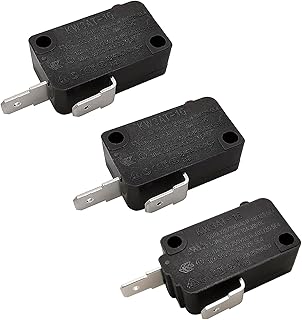
HiQltyla KW3AT-16 16A Microwave Door Switch |
|
Check Price |

|
KW3A 2NO 2NC Microwave Door Interlock Switch |
|
Check Price |

|
LONYE WB24X10103 Microwave Door Interlock Switch |
|
Check Price |

|
LONYE 3B73362F Two-Pack Door Interlock Switches |
|
Check Price |

|
Weewooday 12-Pack Microwave Door Switch Replacements |
|
Check Price |

|
KW3AT-16 16A Microwave Door Interlock Switch |
|
Check Price |

|
KW3A 16A 2NO 1NC Microwave Door Switch |
|
Check Price |

|
DaierTek KW3A 4NO 2NC Microwave Door Switch |
|
Check Price |
Table of Contents
- 1. KW3A KW3AT-16 Microwave Door Interlock Switch
- 2. KW3A 16A 125/250V Microwave Door Interlock
- 3. HiQltyla KW3AT-16 16A Microwave Door Switch
- 4. KW3A 2NO 2NC Microwave Door Interlock Switch
- 5. LONYE WB24X10103 Microwave Door Interlock Switch
- 6. LONYE 3B73362F Two-Pack Door Interlock Switches
- 7. Weewooday 12-Pack Microwave Door Switch Replacements
- 8. KW3AT-16 16A Microwave Door Interlock Switch
- 9. KW3A 16A 2NO 1NC Microwave Door Switch
- 10. DaierTek KW3A 4NO 2NC Microwave Door Switch
In-Depth Reviews: Top 10 Wiring Microwave Door Switch Diagram
Finding a trustworthy wiring microwave door switch diagram can prevent missed connections, incorrect assumptions, and unnecessary repairs. A wiring microwave door switch diagram is popular among homeowners, repair technicians, and appliance learners because it makes a complex safety circuit easier to understand. In this section, you can expect top-rated picks, side-by-side comparisons, and practical guidance for selecting the reference that best fits your experience, documentation, and repair situation.
1. KW3A KW3AT-16 Microwave Door Interlock Switch
A microwave that stops after a few minutes or refuses to start because of a worn door latch can turn an ordinary reheating task into a frustrating repair decision. The KW3A KW3AT-16 Microwave Door Interlock Switch gives DIY appliance owners a targeted replacement with two normally open contacts and one normally closed contact. It is especially useful when the original switch has visible damage, loose actuators, or inconsistent behavior.
Installation is most straightforward when the replacement matches the original wiring layout and actuator style. Disconnect the microwave, discharge stored energy according to service guidance, and compare terminal positions before transferring wires. The switch body should seat securely so the latch cannot press the mechanism while the door is open. Incorrect terminal mapping or a poor mechanical fit can prevent proper operation, regardless of electrical ratings.
For owners of older microwaves, this part offers a practical way to restore normal door monitoring after the factory switch becomes brittle, cracked, or unresponsive. Its 16A rating and 125/250V compatibility suit common interlock circuits, but the 2NO-plus-1NC arrangement must match the wiring diagram. Confirm the connector and dimensions before ordering, and avoid forcing an unfamiliar design onto the latch.
- Two normally open and one normally closed contacts
- Rated for up to 16A at 125/250V
- Targets common microwave door interlock failures
- Compact replacement for compatible latch assemblies
- Useful for straightforward DIY appliance repair
- Requires exact terminal and contact-layout compatibility
- Mechanical fit must be confirmed before installation
Get the KW3A KW3AT-16 Microwave Door Interlock Switch now:
2. KW3A 16A 125/250V Microwave Door Interlock
The KW3A 16A 125/250V Microwave Door Interlock is ideal for appliance repair technicians, cautious DIY owners, and maintenance teams replacing a failed microwave door switch with the correct contact arrangement. Its two normally open and one normally closed contacts support common interlock applications, while the 16A rating provides useful capacity for circuits operating across 125V and 250V. Exact model and wiring compatibility remain essential.
Its main benefit is predictable integration with a compatible original switch. When the terminal positions, body shape, and latch engagement match, the part can restore the door-monitoring circuit without redesigning the wiring. A switch that appears similar but has a different contact sequence may allow the microwave to start under unsafe conditions or prevent it from starting at all, making the diagram more important than the product photograph.
Installation should begin with the microwave disconnected from power and any stored electrical energy safely discharged. Compare every terminal, inspect the door latch, and verify that the replacement activates at the intended depth. This switch is best suited to repairs involving an interlock that has become loose, cracked, or intermittently responsive. It is not a universal solution for every microwave brand or door-latch geometry.
- Supports both 125V and 250V microwave circuits
- 16A current rating for compatible interlock applications
- Includes two normally open and one normally closed contact
- Can restore a failed factory-style door switch
- Useful for experienced appliance repair work
- Not compatible with every contact configuration
- Requires careful high-voltage safety precautions
Get the KW3A 16A 125/250V Microwave Door Interlock now:
3. HiQltyla KW3AT-16 16A Microwave Door Switch
The standout feature of the HiQltyla KW3AT-16 16A Microwave Door Switch is its clearly defined combination of two normally open contacts and one normally closed contact. That 2NO, 1NC arrangement makes it a practical candidate for repairing a compatible 125VAC microwave door-interlock circuit. The 16A rating is designed for applications where the replacement must handle the current specified by the original wiring and service documentation.
Its value is most apparent when a microwave begins behaving inconsistently because the original interlock is worn or damaged. A replacement with the correct contact logic can restore power to the cooking circuit only when the door latch operates properly. The switch must also align physically with the latch and match the original terminal layout; electrical ratings alone cannot compensate for a different contact sequence or mounting design.
Before purchase, owners should locate the microwave model number and compare the switch body, terminals, wire order, and actuator position with the failed component. Installation requires disconnecting the appliance and addressing stored electrical energy according to professional service guidance. This part is best for DIY users who can identify the correct circuit configuration and recognize the importance of a secure mechanical fit.
- Specific 2NO plus 1NC contact arrangement
- 16A rating for compatible 125VAC circuits
- Designed as a common interlock replacement
- Can address intermittent door-sensing behavior
- Compact form may simplify compatible installations
- Only suitable when the contact layout matches
- No guarantee of compatibility across all microwave brands
Get the HiQltyla KW3AT-16 16A Microwave Door Switch now:
4. KW3A 2NO 2NC Microwave Door Interlock Switch
Unlike many single-purpose door switch listings, the KW3A 2NO 2NC Microwave Door Interlock Switch provides two normally open and two normally closed contacts in one assembly. That broader contact arrangement can suit compatible microwave circuits that require more switching positions than a standard 2NO, 1NC replacement. For repair buyers tired of receiving a part with the wrong terminal logic, clearly matching the four-contact configuration is the essential first step.
The switch can be useful when an existing interlock has cracked, loosened, or become inconsistent under normal latch pressure. Its body must engage the door mechanism at the same point as the original, and each wire must connect to the correct terminal. Installing a functional-looking switch with the wrong contact orientation may not restore operation and could compromise the door-safety circuit, so the appliance wiring diagram should guide the repair.
This option is best for technicians or experienced DIY owners servicing a microwave that specifically uses a 2NO, 2NC interlock. It is not a drop-in choice for systems designed around two normally open and one normally closed contacts. Verify the model number, terminal arrangement, voltage, current requirements, and latch dimensions before purchasing or energizing the appliance.
- Two normally open contacts included
- Two normally closed contacts included
- Four-contact layout for specialized compatible circuits
- Addresses worn or inconsistent original interlocks
- Single assembly can simplify multi-contact replacement
- Not interchangeable with 2NO, 1NC door switches
- Incorrect wiring can disable the safety interlock
Get the KW3A 2NO 2NC Microwave Door Interlock Switch now: (See Also:Best Healthy Microwave Meals Delivered Reviews)
5. LONYE WB24X10103 Microwave Door Interlock Switch
Imagine a reheated dinner sitting cold because a GE microwave no longer recognizes the door being closed. In that situation, the LONYE WB24X10103 Microwave Door Interlock Switch offers a replacement listed for WB24X10103, 3B73361E, and SZM-V16-FD-63 applications. Its usefulness depends on confirming that the microwave model and existing part number actually match the listed references.
Cross-reference compatibility is the main practical advantage. Finding several recognized replacement numbers in one listing can make it easier to identify the correct part without relying on a visually similar switch. The installer should still compare the terminal layout, wire order, body shape, and latch engagement. A matching part number provides a strong starting point, but variations in production runs or model revisions must be ruled out.
For a compatible oven, the new interlock can restore normal door monitoring after the original becomes loose, cracked, or electrically unresponsive. Power should be disconnected and stored energy safely addressed before removal. This product is best suited to GE-related systems identified in the listing and to repairers who can cross-check the full model number. It should not be selected solely because the microwave is branded GE.
- Lists several common interlock part references
- Designed for compatible GE microwave applications
- Useful reference coverage during part identification
- Can replace a worn or failed door switch
- Potentially simplifies model-specific searching
- Compatibility is limited to verified listed references
- Terminal and latch geometry still require confirmation
Get the LONYE WB24X10103 Microwave Door Interlock Switch now:
6. LONYE 3B73362F Two-Pack Door Interlock Switches
The LONYE 3B73362F Two-Pack Door Interlock Switches deliver two normally open replacement switches for the price of a single repair part, making the set appealing for value-conscious buyers. The listed references cover applications associated with 3B73362F, WB24X10047, SZM-V16-FD-63, and PS3522738, so a second switch can be useful for a second microwave, a maintained appliance, or a known future failure.
Having a spare can reduce the inconvenience of discovering that the first switch does not match the terminal arrangement or latch profile. Before installing either component, the owner should verify the full model number, contact behavior, wire order, and physical dimensions against the original part. Buying two does not make an incompatible switch usable, and the set remains limited to the normally open configurations named in the listing.
For compatible LG, GE, or Samsung applications identified by those references, the switches can address worn interlocks that prevent normal microwave operation. They are especially practical for property managers, repair shops, or households maintaining more than one compatible appliance. Installation still requires the microwave to be disconnected, with stored electrical energy safely discharged and the latch mechanism inspected for alignment.
- Two normally open switches in one package
- Useful spare for compatible second appliances
- Covers several listed replacement references
- Convenient for repair shops or property maintenance
- May lower the cost of preparing for repeat failures
- Both switches are limited to compatible normally open circuits
- Multiple listed references do not guarantee universal fit
Get the LONYE 3B73362F Two-Pack Door Interlock Switches now:
7. Weewooday 12-Pack Microwave Door Switch Replacements
Finding a cracked microwave interlock after the oven suddenly stops responding to the door is frustrating, especially when one appliance is the only source of hot meals. The Weewooday 12-Pack Microwave Door Switch Replacements provides a substantial supply for compatible repairs, allowing a user to replace a failed component or keep several spares available. Each included part still needs to be matched carefully to the microwave and its wiring requirements.
The twelve-piece format is the central advantage for landlords, appliance technicians, communal kitchens, or households operating several microwaves. Instead of purchasing individual parts repeatedly, a maintenance team can inspect compatible units and address multiple worn switches at once. The pack may also be helpful when minor mechanical damage contributes to intermittent door-sensing behavior, provided the replacement has the correct contact arrangement and physical dimensions.
Compatibility should be verified before the pack is opened or installed. Users should compare model numbers, terminal positions, wire order, actuator shape, voltage, and current requirements with the failed switch. A bulk purchase can be economical for the wrong circuit and inconvenient if several units use different interlock designs. Power must remain disconnected during inspection and installation, and stored energy requires appropriate service precautions.
- Twelve replacements support multi-unit maintenance
- Useful for repair shops and shared kitchens
- Allows spares to be kept on hand
- Can streamline replacement of similar worn switches
- Potentially reduces repeated individual purchases
- Compatibility must be checked for every appliance
- Bulk quantity offers no value if the switch design differs
Get the Weewooday 12-Pack Microwave Door Switch Replacements now:
8. KW3AT-16 16A Microwave Door Interlock Switch
The KW3AT-16 16A Microwave Door Interlock Switch is ideal for experienced DIY appliance owners and repair technicians who have identified a compatible KW3A or KW3AT-16 door-interlock circuit. Its two normally open contacts and one normally closed contact provide the switching arrangement required by many common replacement applications. The 16A rating also supports use in properly specified 125/250V circuits, although the appliance diagram must confirm every detail.
The product is most useful after an original switch becomes cracked, loose, or unreliable under the door latch. Because it follows a defined 2NO, 1NC layout, it can serve as a more precise option than a generic one- or two-contact switch. That specificity only helps when the original terminal sequence, mounting method, and actuator geometry match. A visually similar component with different logic can still prevent operation.
Repairs should begin by recording the wire connections and confirming the failed switch physically engages at the correct latch depth. Disconnect the microwave and safely address any stored electrical energy before handling the component. This replacement is best for users who understand the safety circuit and can consult the appliance documentation. It is not intended as a universal microwave door switch or a substitute for an incorrectly specified contact arrangement.
- Designed for compatible KW3A-series interlocks
- Two normally open and one normally closed contact
- 16A current rating for suitable circuits
- Supports common 125/250V microwave applications
- More specific than many generic replacement switches
- Contact sequence must match the original circuit
- Installation involves a high-voltage appliance safety risk
Get the KW3AT-16 16A Microwave Door Interlock Switch now:
9. KW3A 16A 2NO 1NC Microwave Door Switch
The defining feature of the KW3A 16A 2NO 1NC Microwave Door Switch is its combination of two normally open contacts, one normally closed contact, and a 16A rating. That precise specification makes it a strong candidate for a compatible microwave interlock replacement rather than a general-purpose electrical switch. Buyers who can match the terminal arrangement and latch design can restore door sensing after the original component becomes unreliable. (See Also:Best Kitchenaid Oven Microwave Combo Reviews)
Intermittent behavior is a common reason to consider replacement. A cracked switch might allow the oven to run under some latch conditions but fail to start under others, while a loose actuator can create a similar symptom. The contact layout must reproduce the original circuit’s intended behavior exactly. Merely restoring continuity is not enough, because the microwave’s control and safety circuits depend on the correct sequence of signals.
This switch is best for technicians or DIY owners working from an appliance diagram and able to verify the connector, wire order, and mechanical engagement. It should not be assumed to fit every KW3A-labeled application without comparison. The microwave must be disconnected, and stored electrical energy safely handled, before the switch is removed or installed.
- Two normally open contacts specified
- One normally closed contact specified
- 16A rating supports suitable interlock circuits
- Precise configuration aids correct replacement
- Can resolve compatible worn or intermittent switches
- Exact contact and terminal matching is required
- Physical dimensions should be verified before purchase
Get the KW3A 16A 2NO 1NC Microwave Door Switch now:
10. DaierTek KW3A 4NO 2NC Microwave Door Switch
Far more frustrating than a failed microwave switch is finding several generic replacements that each have the wrong number or type of contacts. The DaierTek KW3A 4NO 2NC Microwave Door Switch avoids that mismatch by providing four normally open and two normally closed contacts in one T125-style assembly. That six-contact arrangement is the standout feature for compatible systems that cannot operate with a reduced 2NO, 1NC design.
The switch is intended for owners and technicians who can positively identify the required six-contact interlock. Compatibility involves more than checking the KW3A or KW3AT name: terminal order, body shape, actuator position, voltage, and current requirements must all correspond with the original component. Listing references and photographs can narrow the search, but the model wiring diagram and failed switch should provide the final confirmation.
Once matched, the assembly can replace an interlock that has become cracked, loose, or inconsistent and is preventing normal door monitoring. Its 4NO, 2NC logic is useful in circuits that use multiple contact paths for switching and status detection. It is not an interchangeable upgrade for lower-contact systems, and changing configurations without the correct design could compromise operation. Installation should be performed with the appliance disconnected and stored energy addressed.
- Four normally open contacts included
- Two normally closed contacts included
- Six-contact layout suits specialized interlock circuits
- 16A rating for compatible applications
- Offers both 125VAC and 250VAC compatibility
- Not compatible with lower-contact switch configurations
- Complex terminal mapping raises installation risk
Get the DaierTek KW3A 4NO 2NC Microwave Door Switch now:
What to Look for When Buying Wiring Microwave Door Switch Diagram
1. What Is a wiring microwave door switch diagram?
A wiring microwave door switch diagram shows how the door interlock relates to the microwave’s safety circuit. It helps technicians understand which components can interrupt power when the door opens. Use it to trace a failed door switch, verify a replacement connection, or explain a repair to another person.
Most owners benefit from pairing it with model-specific service documentation. Experienced repairers benefit from a clear legend for switch states, test points, and color codes. Confirm all symbols before use.
2. Key Features That Actually Matter
Evaluate a diagram by the information you can verify and the ease with which you can follow it on the actual microwave.
- Look for sharp lines, readable labels, accurate wire colors, and a legend that explains every symbol.
- Choose durable, well-presented source material that remains legible through repeated handling or printing.
- Favor diagrams with numbered test points, terminal labels, and clear notes that simplify setup and maintenance.
- Check whether the page size, visual layout, and model coverage fit the physical layout of your microwave.
- Compare free and paid references by completeness, clarity, update access, and correction support across budgets.
- Consider the source reputation, publication date, and any warranty, return policy, or technical support terms.
- Confirm compatibility with the microwave’s model, power supply, door-switch design, and existing wiring configuration.
3. How to Choose the Right wiring microwave door switch diagram
Match the diagram to your frequency of use. Occasional troubleshooters need a clear visual reference, while frequent repair technicians may need detailed test points, alternate configurations, and model-specific cross-references.
Set a budget based on documentation quality rather than file quantity. Free diagrams can work when they include complete information, but paid references may justify their cost when they offer updates, corrections, or broader model coverage. (See Also:Best Willz Microwave Reviews)
Compare your expectations with the Top 10 list. Choose the strongest fit for your experience level, required detail, and repair complexity, then verify every connection against the service manual.
4. Common Buyer Mistakes to Avoid
Most mistakes involve treating an incomplete or mismatched reference as authoritative. Avoid these errors before disconnecting components or testing circuits.
- Do not use a diagram for a different model, because terminal placement and interlock arrangements may differ.
- Do not ignore wire colors or terminals, as misreading them can damage a switch or disrupt the safety circuit.
- Do not assume a generic diagram replaces official documentation, because it may omit model-specific limits and warnings.
- Do not skip the legend, since unfamiliar symbols can reverse your understanding of the switch’s open and closed states.
- Do not work on a powered microwave, because unplugging it and verifying a safe discharge remain essential before inspection.
- Do not rely on a low-resolution screenshot, because unreadable labels can lead to incorrect terminals and wasted time.
Questions About Wiring Microwave Door Switch Diagram? We Have Answers
Can I safely use a generic wiring diagram?
Only use a diagram when it matches the microwave’s model and wiring configuration. Disconnect power, verify the interlocks, and follow the manufacturer’s service procedure. Treat a generic diagram as a learning aid, not as a replacement for model-specific documentation during a repair.
How do I check compatibility before replacing a switch?
Look for the model number, power source, door-switch terminals, interlock count, and relevant wiring colors. If the diagram omits any of these details, do not assume a connection is interchangeable. Compare it with the service manual and the physical component layout.
What makes a wiring diagram clear and high quality?
A quality diagram uses readable labels, consistent symbols, sharp linework, and a clear legend. Check that every wire terminates logically and that the page identifies the intended model or series. A crowded screenshot without notes is difficult to trust or use safely.
How can I tell whether a diagram is reliable?
A diagram is reliable when its source is transparent, its information is dated, and its symbols follow recognized electrical conventions. Cross-check the door-switch behavior against the service manual and an electrical meter. If two sources disagree, stop and obtain qualified service support.
Is the cheapest wiring diagram always the best value?
The cheapest option can be worthwhile if it provides complete, legible, model-matched information. A paid resource is not automatically better, so compare the preview, update policy, and technical support. A slightly higher cost may help when the source offers corrections, backups, or clearer instructions.
Do I need advanced skills to follow a door switch diagram?
Basic diagram-reading skills are enough to begin a visual check, but microwave repairs can involve stored charge, high voltage, and safety interlocks. Follow the service procedure, use appropriate test equipment, and avoid probing live circuits. Hire a qualified technician when the instructions require it.
Final Verdict
The best wiring microwave door switch diagram is the one that matches your exact model, presents complete information clearly, and aligns with the official service documentation. Compare each reference by legibility, terminal detail, interlock behavior, model coverage, update support, and safety notes rather than choosing by appearance alone. Use a generic diagram to understand the circuit, but confirm every connection before replacing a component. If the documentation is incomplete, conflicting, or difficult to interpret, pause the repair and consult a qualified technician.