
Choosing a wall oven with microwave can feel complicated because the wrong choice may not suit your kitchen, routine, or available space. This guide helps you compare options in a clear side-by-side table, understand the buying criteria that matter most, and approach the decision with fewer surprises. It is designed for cooks who want one appliance to handle several cooking tasks but do not want to rely on vague marketing claims. You will find practical guidance on installation constraints, everyday operation, maintenance, capacity, reliability, and cost. We also explain how to identify your household’s real needs before shopping, which questions to ask, and where compromises can create problems later. Whether you are replacing an existing unit, planning a renovation, or comparing compact and full-size choices, this overview gives you a structured starting point. Use it to narrow the field and choose an option that fits your kitchen and long-term plans.
Comparison Table: Top 10 Wall Oven With Microwave
| Image | Product | Highlights | Check Price |
|---|---|---|---|

|
KoolMore 24-Inch Built-In Microwave and Oven Combo |
|
Check Price |

|
AAOBOSI 24-Inch Built-In Microwave Convection Combo |
|
Check Price |

|
Midea 24-Inch 2.5-Cu.-Ft. Eight-Mode Wall Oven |
|
Check Price |

|
ThermoMate 24-Inch Microwave Combo and 12-Function Oven Set |
|
Check Price |

|
ThermoMate 24-Inch Built-In Microwave and Wall-Oven Bundle |
|
Check Price |

|
ThermoMate 24-Inch 1.6-Cu.-Ft. Sensor Microwave Combo |
|
Check Price |

|
GE 30-Inch 1.6-Cu.-Ft. Over-the-Range Microwave |
|
Check Price |

|
Gasland 24-Inch 1.6-Cu.-Ft. 11-Level Built-In Microwave |
|
Check Price |
|
KoolMore 24-Inch 1.2-Cu.-Ft. Flat-Bottom Microwave Drawer |
|
Check Price |

|
Samsung 30-Inch Smart Double Wall Oven with Steam |
|
Check Price |
Table of Contents
- 1. KoolMore 24-Inch Built-In Microwave and Oven Combo
- 2. AAOBOSI 24-Inch Built-In Microwave Convection Combo
- 3. Midea 24-Inch 2.5-Cu.-Ft. Eight-Mode Wall Oven
- 4. ThermoMate 24-Inch Microwave Combo and 12-Function Oven Set
- 5. ThermoMate 24-Inch Built-In Microwave and Wall-Oven Bundle
- 6. ThermoMate 24-Inch 1.6-Cu.-Ft. Sensor Microwave Combo
- 7. GE 30-Inch 1.6-Cu.-Ft. Over-the-Range Microwave
- 8. Gasland 24-Inch 1.6-Cu.-Ft. 11-Level Built-In Microwave
- 9. KoolMore 24-Inch 1.2-Cu.-Ft. Flat-Bottom Microwave Drawer
- 10. Samsung 30-Inch Smart Double Wall Oven with Steam
Our Top Picks for Wall Oven With Microwave Reviews
A wall oven with microwave is popular because it combines two cooking routines in one space-sensitive format, helping busy households streamline meal preparation without crowding the kitchen. It appeals to renovators, apartment dwellers, and anyone comparing cooking performance, capacity, installation needs, and value. In the Top 10 wall oven with microwave Reviewed section, you can expect top-rated picks, side-by-side comparisons, and clear takeaways for different priorities and budgets.
1. KoolMore 24-Inch Built-In Microwave and Oven Combo
A crowded kitchen can turn reheating dinner and roasting a meal into a frustrating relay between appliances. The KoolMore combo addresses that by combining a 1000-watt microwave with broil and convection cooking in one 24-inch built-in space. Its touch LCD keeps controls visible, while the soft-close door makes daily use feel gentler than many appliances with abrupt hinges and leaves the room uncluttered on busy evenings.
The stainless finish suits modern cabinetry and is practical for homes that want fewer separate units. Reheating, crisping leftovers, baking small casseroles, and finishing food under the broiler cover a useful range of weeknight meals. The combination is especially handy when counter space is limited, although buyers should confirm ventilation, trim, and electrical requirements before installation. That flexibility is valuable during busy weeks when cooking from scratch and reheating happen back to back.
Using the microwave for quick jobs and conventional heat for larger dishes keeps workflow flexible. The 1000-watt output and touch controls should appeal to people who regularly cook for several people, while the NEMA 5-20P plug simplifies connection planning. It is best for remodelers replacing a single opening or creating a compact all-in-one cooking center. The controls may take time to learn, and installation is not a do-it-yourself project.
- Combines microwave, broil, and convection functions
- Soft-close door improves everyday handling
- Touch LCD provides clear centralized controls
- Stainless finish suits modern kitchens
- Saves counter space by using one opening
- 1000-watt output suits everyday meal preparation
- Installation requires compatible trim, ventilation, and electrical service
- Control learning curve may take time
Get the KoolMore 24-Inch Built-In Microwave and Oven Combo now:
2. AAOBOSI 24-Inch Built-In Microwave Convection Combo
This AAOBOSI combo is ideal for cooks who want one built-in appliance to handle reheating, weeknight baking, convection roasting, and crisp air-fryer-style results without juggling a countertop microwave and separate toaster oven. Its 1.6-cubic-foot cavity and ten cooking modes make it especially relevant to compact kitchens, busy parents, and anyone building a more capable microwave cooking station. At 1000 watts, it also suits people who value straightforward power over premium branding.
The sensor and auto-cook settings can reduce guesswork when preparing vegetables, popcorn, frozen foods, or portions of the same recipe. Convection and air-fryer functions broaden the appliance beyond reheating, while the stainless exterior coordinates with modern cabinetry. The drop-down door creates a convenient loading position, particularly for shallow trays and tall food containers. It is a practical fit for cooks who want more versatility without designing around several bulky appliances.
Home cooks should still consider clearance above the unit and the surrounding cabinet layout before installation. The control panel and LCD-style display are likely to be more involved than a simple microwave keypad, so time to understand the modes is worthwhile. It works well for everyday meals and moderate household portions, especially when crisping and convection browning matter. Buyers seeking a truly compact solution may find 1.6 cubic feet modest.
- Ten cooking modes expand beyond basic reheating
- Sensor and auto-cook functions simplify common foods
- Convection and air-fryer-style options add versatility
- Drop-down door provides convenient loading access
- Stainless finish coordinates with modern cabinetry
- Compact 1.6-cubic-foot capacity works well for moderate portions
- More controls and modes require a short learning period
- Capacity may be modest for large dishes
Get the AAOBOSI 24-Inch Built-In Microwave Convection Combo now:
3. Midea 24-Inch 2.5-Cu.-Ft. Eight-Mode Wall Oven
The standout feature of the Midea wall oven is its 8-in-1 cooking system, which gives a compact 2.5-cubic-foot appliance more flexibility than a basic single-purpose oven. It is a strong option for home cooks who want baking, broiling, and convection-style preparation in one space without expecting microwave reheating from the same unit. For small-to-medium households, that variety can make a single oven feel much more useful.
Stainless steel gives this model a clean, durable-looking finish that pairs well with contemporary kitchen appliances. The electronic control panel also keeps the front looking streamlined, although the exact layout should be checked against cabinet depth. Its moderate capacity suits couples, apartments, and families preparing weeknight casseroles, roasted vegetables, and moderate trays of cookies or bread, without crowding the cavity. The format is practical for busy weeknights and compact renovations that need more capability than a tiny countertop oven.
Because this is a dedicated wall oven rather than a microwave combination, shoppers should confirm that their cabinet opening and cooking priorities match. The 24-inch format is attractive for renovations seeking a built-in footprint, while eight modes reduce the need for multiple specialized appliances. It suits bakers who bake, roast, or broil and can reheat food elsewhere. Proper installation and heat clearance are essential.
- Eight cooking modes provide useful flexibility
- 2.5-cubic-foot capacity suits moderate household portions
- Stainless finish complements contemporary kitchens
- Built-in design saves counter workspace
- Electronic controls create a streamlined appearance
- Can consolidate baking, roasting, and broiling tasks
- Does not provide microwave reheating
- Exact clearance and control layout should be verified before installation
Get the Midea 24-Inch 2.5-Cu.-Ft. Eight-Mode Wall Oven now:
4. ThermoMate 24-Inch Microwave Combo and 12-Function Oven Set
Many microwave-and-oven packages force buyers to sacrifice one function or accept a long, vague bundle description. The ThermoMate set contrasts with that by pairing a 24-inch built-in microwave/convection combination with a separate 24-inch electric wall oven, giving a household two full-size cooking zones. The wall oven’s 12 functions and 3100W convection specification position the package for large-format cooking and flexible entertaining in a kitchen designed for serious home cooking.
Using both units is the key advantage: one appliance can cover rapid reheating and combination cooking, while the second oven handles baking, broiling, roasting, or simultaneous family meals. That arrangement is valuable during holidays, dinner parties, or whenever a full oven is already occupied. The stainless, built-in presentation also creates a cohesive look, though this is a substantial two-appliance investment rather than a budget substitute day to day.
The trade-offs come with coordinating two 24-inch openings, dedicated electrical requirements, and enough cabinet space for ventilation. Buyers should verify the exact 3100W rating, circuit needs, trim dimensions, and function lists before ordering. It is best for households that genuinely need two ovens, not for cooks seeking a single compact replacement, because installation and kitchen layout planning add substantially to the purchase and professional installation.
- Provides two separate built-in cooking zones
- Enables simultaneous meal preparation
- Microwave-convection unit handles quick and combination cooking
- Separate wall oven includes 12 functions
- Coordinated stainless built-in appearance
- Useful for entertaining and large households
- Requires two compatible cabinet openings and electrical arrangements
- Higher installation and purchase cost than a single-appliance solution
Get the ThermoMate 24-Inch Microwave Combo and 12-Function Oven Set now:
5. ThermoMate 24-Inch Built-In Microwave and Wall-Oven Bundle
Imagine a holiday morning with a breakfast casserole baking while coffee reheats nearby: the ThermoMate bundle keeps both jobs moving without a countertop microwave. Its two 24-inch built-in appliances combine a microwave/convection unit with a separate electric wall oven, a practical setup for households that cook frequently. It shines when one dish needs long baking and another needs quick heating, allowing each appliance to work at once.
Having two ovens also creates more flexibility for weeknight meals. The microwave/convection combination can reheat leftovers or prepare smaller dishes, while the wall oven handles a full tray, roast, or casserole. Because they are built in, the pair can look integrated into cabinetry and preserve valuable counter workspace. The arrangement is best for busy families, frequent entertainers, or anyone who dislikes waiting for one oven to finish before starting another.
The compromise is that this configuration requires two suitable cabinet openings, adequate electrical service, ventilation clearance, and precise measurement. It is less practical for a small kitchen or a remodeler seeking one appliance to replace an existing opening. Shoppers should compare controls, cavity sizes, racks, and included accessories rather than assuming the two units are identical. When planned correctly, though, the bundle offers a straightforward way to double cooking capacity.
- Two appliances allow simultaneous cooking
- Separate wall oven supports full-size dishes
- Microwave-convection unit covers quick and combination tasks
- Built-in design preserves counter space
- Coordinated appliances create a cohesive kitchen look
- Useful for families and frequent entertainers
- Requires two suitable cabinet openings
- Not a simple replacement for a single-appliance kitchen
Get the ThermoMate 24-Inch Built-In Microwave and Wall-Oven Bundle now:
6. ThermoMate 24-Inch 1.6-Cu.-Ft. Sensor Microwave Combo
At this price, the ThermoMate combo makes more cooking capability available than a plain built-in microwave without asking buyers to sacrifice the standard 24-inch footprint. It combines a 1000-watt microwave, 1.6-cubic-foot cavity, and convection oven in one appliance, while sensor cooking and the touch LCD display aim to make operation easier. It is a strong value for homeowners upgrading a dedicated microwave bay or cooks who want more than reheating.
Sensor programs help with popcorn, frozen vegetables, and reheated leftovers by adjusting for portions and food type. Convection offers an alternative to microwave-only cooking for baked items, roasted vegetables, and smaller casseroles. A 1000-watt microwave is practical for a 1.6-cubic-foot cavity, and touch controls keep the front panel clean. It suits everyday cooks who want versatility without an oversized appliance.
For buyers replacing an older unit, the stainless finish gives the appliance a modern look and the LCD makes settings easier to check than a sparse display. The 24-inch format is designed for a built-in opening, but actual trim and ventilation requirements still need to be confirmed during planning. It is a sensible choice for a second kitchen, remodeling, or a combination wall oven setup where space and simple operation matter.
- Combines microwave and convection cooking
- Sensor programs help with common foods and portions
- Touch LCD provides centralized settings
- Stainless finish gives the unit a modern appearance
- Standard 24-inch format fits many built-in plans
- Provides versatility without a large countertop footprint
- 1.6-cubic-foot cavity may limit larger dishes
- Ventilation, trim, and electrical requirements need confirmation
Get the ThermoMate 24-Inch 1.6-Cu.-Ft. Sensor Microwave Combo now:
7. GE 30-Inch 1.6-Cu.-Ft. Over-the-Range Microwave
Reaching over a warm stove to retrieve a reheated meal can be an annoying daily ritual, particularly in a kitchen where the cooktop and microwave share a wall. The GE over-the-range model puts a 1.6-cubic-foot, 1000-watt microwave within easy reach while eliminating a separate countertop unit. Its stainless finish coordinates with many appliance packages and makes it a practical choice for apartments, condos, and compact kitchens.
For everyday meals, this GE is a dependable middleground for reheating leftovers, warming bowls, and preparing popcorn or other quick foods without taking up precious counter space. The 30-inch width suits a standard over-range opening, while 1000 watts gives users a more useful starting point than very compact low-power models. The broad cavity may handle larger plates and serving dishes, although actual fit and controls should be checked before installation.
Compared with a countertop microwave, the OTR format also makes the appliance feel integrated into the cooking zone and can keep a wall free of bulky shelves. It is best for someone building a kitchen or replacing a matching over-range unit, especially if the stove area already has overhead clearance. The main trade-off is that above-range installation can be more involved than placing a plug-in microwave on a counter.
- Frees valuable countertop space
- Reaches 1000 watts for everyday heating and cooking
- 1.6-cubic-foot cavity suits common serving dishes
- 30-inch format works with many over-range openings
- Stainless finish coordinates with standard kitchen packages
- Integrates neatly above the cooking zone
- Installation can be more involved than a countertop model
- Requires adequate overhead clearance and compatible cabinetry
Get the GE 30-Inch 1.6-Cu.-Ft. Over-the-Range Microwave now:
8. Gasland 24-Inch 1.6-Cu.-Ft. 11-Level Built-In Microwave
This Gasland microwave is ideal for homeowners replacing a standard built-in unit, apartment dwellers with a cabinet opening, and anyone who wants simple reheating without paying for a convection combination. Its 24-inch format, 1.6-cubic-foot cavity, and 1000-watt output cover the essentials, while 11 power levels give users straightforward control over warming, melting, and cooking. It suits cooks who value familiar functions and a compact installation.
At 1.6 cubic feet, the cavity is large enough for many plates, bowls, and standard microwave containers while remaining appropriate for a 24-inch opening. Eleven power levels are useful when a preset is not ideal, from gently softening butter to reheating a full serving. The built-in format can look more integrated than a countertop model, which helps kitchens with limited work surface and encourages a more permanent, cabinetry-matched appearance.
Those who want convection baking, air-fryer-style crisping, or sensor automation should look at a richer combination instead. The Gasland is a microwave, so its appeal is simplicity, predictable sizing, and a useful selection of power levels rather than multiple specialized modes. It is best for everyday reheating, defrosting, snacks, and moderate portions in a kitchen already designed for a 24-inch built-in appliance. Confirm trim, ventilation, and electrical requirements before purchase.
- Simple, focused microwave functionality
- 1000-watt output handles everyday heating and cooking
- Eleven power levels provide useful control
- 1.6-cubic-foot cavity fits common containers
- 24-inch format suits standard built-in planning
- Integrated design saves counter space
- Does not offer convection or air-fryer functions
- Fewer automation features than combination appliances
Get the Gasland 24-Inch 1.6-Cu.-Ft. 11-Level Built-In Microwave now:
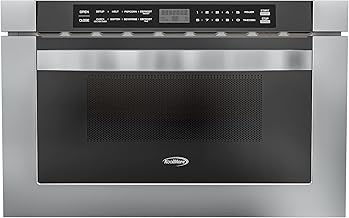
9. KoolMore 24-Inch 1.2-Cu.-Ft. Flat-Bottom Microwave Drawer
The standout feature of the KoolMore drawer is its flat bottom, which creates a more level place for wide dishes, square containers, and tall mugs than a roller-style cavity. The low pull-out design also brings food closer at waist level, making it easier to check and lift heavier servings. Combined with a 1.2-cubic-foot capacity and 1000-watt output, it feels purposeful for modern kitchens that value convenience.
Ten custom cooking levels give users more control over reheating, melting, and preparing everyday foods than a basic full-power-only setup. Memory can save frequent choices, while the timer supports longer sessions without constant attention. The stainless drawer face gives the appliance a built-in look, and its wall-mounted design preserves counter and upper-cabinet space. It is especially helpful for taller users or anyone who finds a high microwave door physically inconvenient.
Because the cavity is shallower than many conventional built-in microwaves, buyers should measure tall cookware and dishes before finalizing cabinetry. The 1.2-cubic-foot capacity is most useful for plates, cups, leftovers, and portioned meals rather than family-size trays. The flat-bottom design helps containers sit securely, but installation still needs trim, support, and ventilation planning. Overall, this drawer fits accessible kitchens and users who prefer an integrated look.
- Flat bottom supports a level placement for containers
- Low drawer design improves access and visibility
- Ten custom cooking levels offer flexible control
- Memory functions preserve frequent settings
- Wall-mounted design preserves counter space
- Stainless face blends with modern cabinetry
- Smaller capacity may not suit large trays
- Shallow cavity requires careful measurement of tall dishes
Get the KoolMore 24-Inch 1.2-Cu.-Ft. Flat-Bottom Microwave Drawer now:
10. Samsung 30-Inch Smart Double Wall Oven with Steam
Many smart ovens leave buyers frustrated by fingerprint-covered doors and connectivity that feels more complicated than helpful. The Samsung double oven takes a different approach with fingerprint-resistant stainless steel, Wi-Fi, and steam cooking in a substantial 30-inch built-in format. It is designed for cooks who want two independent cooking spaces without sacrificing a polished exterior that is easier to keep presentable through busy kitchens.
The double-wall configuration is the main practical advantage: small items can cook in one cavity while a larger casserole, roast, or tray bakes in the other. This is helpful for multi-course meals, family holidays, and households that frequently prepare foods at different temperatures. Steam cooking adds another option for moist results, while the large overall capacity makes the appliance feel more versatile than a compact single oven.
Wi-Fi connectivity can support remote status checks and smart-home routines, although it is most useful to people already comfortable with connected appliances. The fingerprint-resistant finish should reduce visible smudging compared with a steel door, though no surface is maintenance-free. Because this is a double oven, heat management, rack positioning, and installation planning matter more than with a small microwave. It is best for serious home cooks seeking one premium wall oven.
- Two independent oven cavities expand meal flexibility
- Steam cooking supports moist results
- Wi-Fi adds connected convenience
- Fingerprint-resistant finish helps maintain appearance
- Large capacity suits family and holiday cooking
- 30-inch format offers a substantial cooking area
- Double-oven installation requires more planning and clearance
- Connected features are not essential for every cook
Get the Samsung 30-Inch Smart Double Wall Oven with Steam now:
What to Look for When Buying Wall Oven With Microwave
1. What Is a wall oven with microwave?
A wall oven with microwave combines a conventional oven and microwave cooking in one built-in appliance. It is useful when you want to reheat, defrost, or cook smaller portions quickly while retaining a separate space for larger dishes. It benefits busy households, compact kitchens, and cooks who regularly prepare mixed-size meals, though it may not replace a grill or second oven for every task.
These appliances are usually installed in a wall cabinet rather than freestanding. Check whether the controls and cooking routines match your habits. Daily cooks and frequent entertainers gain the most flexibility, while occasional users should compare convenience with price and installation cost.
2. Key Features That Actually Matter
Our evaluation approach focuses on consistent performance in ordinary meals, ease of routine use, and ownership value over time. These criteria reveal which trade-offs are worthwhile for your household.
- For everyday scenarios, compare even cooking, temperature control, reheating, defrosting, browning, and mode-switching convenience. Confirm that your largest usual dish fits the cavity.
- Assess build quality and durability through sturdy racks, smooth door movement, responsive controls, and an interior designed for frequent use. Well-finished hardware should feel balanced and consistent.
- Check installation guidance, ventilation, accessible racks, removable parts, and the effort required to clean grease and spills. Good documentation simplifies setup.
- Compare external dimensions with internal capacity, then measure the opening and delivery route. Extra cavity space is useful only when it matches your dishes.
- Compare total cost, including installation, electrical work, trim pieces, and maintenance. Different budgets can support basic, balanced, or higher spending, but each should deliver dependable essentials.
- Review verified long-term feedback, warranty terms, local repair support, and replacement-part availability. Reliability depends on dependable controls, heating, and door hardware.
- Confirm cabinet material, electrical circuit, ventilation, mounting clearances, and door-swing space. This protects compatibility and reduces surprises during installation.
3. How to Choose the Right wall oven with microwave
Start with the Top 10 list and match candidates to your cooking frequency, serving sizes, and tolerance for a learning curve. Frequent cooks may justify more spending on consistent heat and useful controls, while light users can prioritize simple operation and lower total cost. Set a firm budget that includes installation, trim pieces, and electrical work. Compare only the options that meet your space, capacity, cooking, and reliability needs, then check that their trade-offs suit your expectations.
4. Common Buyer Mistakes to Avoid
Beginner mistakes often turn a promising option into a costly or frustrating purchase. Watch for these five issues:
- Measuring only the exterior can lead to a poor fit. Measure the entire opening and delivery path, then verify installation specifications.
- Skipping electrical and ventilation checks can create costly changes. Have a qualified installer confirm requirements before buying.
- Prioritizing extra functions can hide weak everyday performance. Compare cooking consistency, controls, cleaning, and capacity with your normal routine.
- Buying without checking local service can make repairs slow or costly. Confirm warranty coverage, authorized service, and replacement-part availability.
- Comparing sticker prices alone can cause overspending. Include trim pieces, installation, electrical work, and maintenance in the total.
Wall Oven With Microwave FAQ: Everything You Need to Know
Is a wall oven with microwave easy to use?
Models vary, but a wall oven with microwave is generally straightforward once you learn its control layout. Start with the functions you use most, check the manual for power levels and cooking times, and avoid switching modes mid-task unless the instructions allow it. A quick test before your first real meal also helps build confidence.
Will this appliance fit my existing kitchen setup?
Before buying, measure the cutout, cabinet opening, wall depth, and delivery path rather than relying only on exterior dimensions. Confirm the required electrical supply, connection type, ventilation clearances, and door-swing space. The appliance also needs secure mounting and compatible surrounding materials, so review the installation guide and have a qualified professional verify the plan.
How can I assess cooking quality before buying?
Review independent tests that cover even browning, heating consistency, temperature accuracy, and noise, but also consider the foods and recipes you actually cook. Read verified customer feedback for recurring complaints about controls, doors, or installation. If possible, visit a showroom to inspect the display, finish, interior accessibility, and how firmly the door closes.
What should I know about cleaning and long-term reliability?
Look for durable interior surfaces, removable components, and documented support, since routine cleaning is easier when seams and racks are accessible. Wipe spills promptly, use the recommended cleaning method, and avoid abrasive pads or harsh chemicals. Check the warranty, local service coverage, and replacement-part availability before buying, and follow all maintenance instructions.
Is a wall oven with microwave worth the extra cost?
It can be worthwhile if the combined format saves time, reduces cabinet competition, or replaces two appliances you would otherwise use. The value depends on cooking needs, installation work, and the price gap between comparable units. Calculate the total ownership cost, including trim kits, electrical changes, and maintenance, rather than comparing sticker prices alone.
Final Verdict
After weighing cooking performance, fit, usability, cleaning, reliability, and total cost, the best wall oven with microwave is not necessarily the model with the longest specification list. Choose the option that fits your cabinet opening, handles your usual meals consistently, and carries a sensible warranty. If your household values compact convenience and flexible cooking, the combined format can be a practical fit; if not, saving money and complexity may be wiser.