
Choosing a microwave movement sensor can feel confusing when you are comparing technical terms, installation requirements, and everyday practicality. You may want a solution that responds consistently without requiring constant attention, or you may be working with a busy space where convenience and reliability matter most. This guide gives a clear starting point for your decision. It explains what to look for, how different options relate to existing equipment, and which questions to ask before you buy. You will also find a comparison table organized around the factors that can influence your experience, along with practical buying tips for comparing performance, upkeep, compatibility, and overall value. Use the guidance to narrow the field, set realistic expectations, and choose an option that suits your routine rather than relying on vague claims. Remember that the best choice is the one you can understand, install correctly, and operate with confidence every single day.
Microwave Movement Sensor Comparison Chart: Top 10 Picks
| Image | Product | Highlights | Check Price |
|---|---|---|---|

|
KW3A Microwave Door Interlock Switch, 16A |
|
Check Price |

|
Universal Microwave Waveguide Cover, Five Mica Sheets |
|
Check Price |

|
SONOFF SNZB-06P Zigbee Presence Radar Sensor, 5.8GHz |
|
Check Price |
|
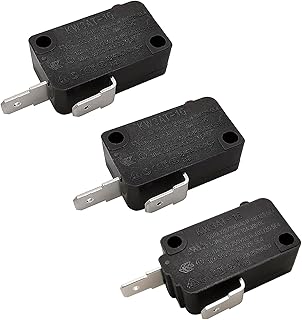
HiQltyla KW3AT-16 Microwave Door Switch, 2NO+1NC |
|
Check Price |

|
RAYZEEK Ceiling-Mount 360° Occupancy Sensor, 120V |
|
Check Price |

|
Smart Radar Motion Sensor Light Socket Adapter, E26/E27 |
|
Check Price |

|
CQRobot 10.525GHz Microwave Sensor for Arduino and Raspbe… |
|
Check Price |

|
Five-Pack RCWL-0516 Microwave Radar Motion Modules |
|
Check Price |

|
Request-to-Exit Microwave Automatic Door Sensor, Black |
|
Check Price |

|
Remote Control Programmer for Microwave or PIR Sensor, 1PK |
|
Check Price |
Table of Contents
- 1. KW3A Microwave Door Interlock Switch, 16A
- 2. Universal Microwave Waveguide Cover, Five Mica Sheets
- 3. SONOFF SNZB-06P Zigbee Presence Radar Sensor, 5.8GHz
- 4. HiQltyla KW3AT-16 Microwave Door Switch, 2NO+1NC
- 5. RAYZEEK Ceiling-Mount 360° Occupancy Sensor, 120V
- 6. Smart Radar Motion Sensor Light Socket Adapter, E26/E27
- 7. CQRobot 10.525GHz Microwave Sensor for Arduino and Raspbe…
- 8. Five-Pack RCWL-0516 Microwave Radar Motion Modules
- 9. Request-to-Exit Microwave Automatic Door Sensor, Black
- 10. Remote Control Programmer for Microwave or PIR Sensor, 1PK
In-Depth Reviews: Top 10 Microwave Movement Sensor
A microwave movement sensor can make a busy space feel more responsive, but only a thoughtful comparison will separate a convenient setup from a frustrating one. These sensors are popular with homeowners, renters, installers, and accessibility-focused users who want connected equipment to react with less manual input. In this section, you can expect top-rated picks, side-by-side comparisons, and clear context for evaluating microwave movement sensor options for different rooms, routines, and budgets.
1. KW3A Microwave Door Interlock Switch, 16A
The most frustrating microwave moment is pressing start and getting nothing because a door interlock no longer registers correctly. The KW3A targets that problem with a replacement-style 16A switch, two normally open contacts, and one normally closed contact. It is aimed at repairers dealing with a failed door switch, not at adding radar detection or changing the oven’s normal safety behavior.
Its main appeal is matching the electrical contact arrangement rather than relying on appearance alone. The 2NO+1NC layout suits compatible ovens, while the stated 125/250V and 16A rating gives repairers clearer specifications to compare with the original part. This is especially useful when a switch has become intermittent, causing the oven to reset during a simple reheating or defrosting task.
Installation still calls for caution. Microwave door circuits can retain hazardous voltage after unplugging, and connector style, mounting dimensions, and contact sequencing must all be verified against the appliance model. Best suited to experienced DIY repairers or technicians, this switch can restore operation when it truly matches the failed component; it is not a universal fix for every microwave.
- Clearly specified contact configuration
- High 16A current rating
- Supports 125V and 250V circuits
- Useful for intermittent interlock faults
- Compact replacement-style component
- Requires exact model and wiring compatibility
- Unsafe for inexperienced appliance repairs
Get the KW3A Microwave Door Interlock Switch, 16A now:
2. Universal Microwave Waveguide Cover, Five Mica Sheets
This five-pack is ideal for appliance repairers, property maintenance teams, and careful DIY owners who want spare microwave waveguide covers without ordering them one at a time. The universal mica format is convenient for common builds, but universal should never replace measuring. Each sheet serves as a protective barrier around the waveguide area, not decorative trim, a rack liner, or a food-contact surface.
Having five on hand is useful for rental units, busy repair benches, or several appliances without repeated shipping. Mica is lightweight and reasonably easy to trim, which can make a damaged or scorched replacement less disruptive than searching for an exact-looking original. The material also serves the practical purpose of covering the waveguide opening while leaving the microwave’s other internal components undisturbed during a proper repair.
The important caveat is fit and installation. Oven age, model, and service documentation should determine whether a flat mica sheet is appropriate, and the replacement must not obstruct airflow or sit where it could contact moving or hot parts. For anyone comfortable with appliance repair and safety testing, the value is strong; for a sealed or unfamiliar microwave, a technician is the safer choice.
- Five sheets support multiple repairs
- Convenient stock for maintenance work
- Lightweight mica construction
- Can be trimmed for compatible openings
- Useful for replacing scorched covers
- Universal sizing still requires careful measurement
- Incorrect placement can obstruct internal airflow
Get the Universal Microwave Waveguide Cover, Five Mica Sheets now:
3. SONOFF SNZB-06P Zigbee Presence Radar Sensor, 5.8GHz
The feature that sets the SNZB-06P apart is its 5.8GHz cmWave radar sensing, which gives it a different detection approach from a basic passive infrared motion detector. Designed for a Zigbee smart home, it is a better fit for rooms where you want connected human-presence awareness than for a quick, stand-alone lighting upgrade. Its value is network integration as much as detection.
That distinction matters in areas where lighting should respond to activity near furniture, counters, or a doorway without a narrow infrared field being the only option. Because the sensor reports through a compatible Zigbee bridge, automations can be built around occupancy-related events, scenes, and notifications. It is particularly appealing for renters who want sophisticated sensing without running new sensor wires through the home.
Setup is the trade-off. This is not an independent controller: you need a supported bridge and a platform that recognizes the SNZB-06P, plus time to test placement, sensitivity, and automations. The package includes one sensor, so additional rooms require additional units. It is best for an established Zigbee enthusiast or a new smart-home project with a clear expansion plan.
- 5.8GHz cmWave radar sensing
- Designed for human-presence awareness
- Works with compatible Zigbee bridges
- Supports connected lighting and scene automations
- Eliminates local sensor wiring
- Requires a separate compatible Zigbee bridge
- Platform and integration support must be verified
Get the SONOFF SNZB-06P Zigbee Presence Radar Sensor, 5.8GHz now:
4. HiQltyla KW3AT-16 Microwave Door Switch, 2NO+1NC
The standout is a combination of a 16A contact rating and a clearly specified 2NO+1NC terminal layout, reducing the guesswork associated with generic replacements. The HiQltyla KW3AT-16 is aimed at compatible 125VAC microwave door interlock circuits where the physical switch must operate reliably and the terminals need to be identified confidently before installation begins.
Generic switches can look identical while differing in terminal sequence, contact function, or mounting details, leaving a repairer to work from ambiguous diagrams. This model offers a clearer reference point, with two normally open and one normally closed connection identified in the product description. That makes it more useful to technicians who replace several interlock assemblies and want repeatable component selection.
A microwave that starts and then shuts off may indicate several different faults, so replacing the door switch is not a guaranteed solution. Electrical function, physical dimensions, and safe mounting must all match the failed part. Unplugged microwaves can also retain dangerous voltage, making this an experienced repairer or technician purchase rather than a casual plug-and-play replacement.
- Clearly defined 2NO+1NC arrangement
- 16A rating for compatible circuits
- Designed for 125VAC systems
- Reduces uncertainty during parts comparison
- Useful for interlock replacement work
- Not compatible with every microwave model
- Requires safe high-voltage appliance knowledge
Get the HiQltyla KW3AT-16 Microwave Door Switch, 2NO+1NC now:
5. RAYZEEK Ceiling-Mount 360° Occupancy Sensor, 120V
Picture someone arriving from the garage with a bag of groceries, hands full, and wanting the entry lights to come on before they reach the switch. A ceiling-mounted RAYZEEK occupancy sensor can provide that kind of automatic lighting in a hallway, laundry room, closet, or utility area. Its 360-degree coverage is particularly useful near corners where a narrow wall-mounted detector would miss movement.
The benefit is dependable hands-free control without replacing the entire lighting arrangement. Because this is a 120V hardwired model, it is most appropriate for installations where wiring a normal fixture control is practical. It also suits spaces that do not need app-based scheduling or remote monitoring, providing a focused solution for automatic occupancy-based lighting rather than a full smart-home hub.
Results depend heavily on placement and adjustment. Sensitivity, hold time, daylight behavior, and other settings vary by the specific model, so installers should test the sensor rather than assume every RAYZEEK unit behaves identically. Fixture load requirements and wiring instructions also need checking. It is best for an electrician or a homeowner comfortable with standard 120V wiring and safe power isolation.
- Broad 360-degree room coverage
- Hands-free lighting in busy spaces
- 120V hardwired design
- Avoids batteries and wireless pairing
- Useful for closets, halls, and utility rooms
- Requires compatible hardwired lighting control
- Coverage can suffer from poor placement or settings
Get the RAYZEEK Ceiling-Mount 360° Occupancy Sensor, 120V now:
6. Smart Radar Motion Sensor Light Socket Adapter, E26/E27
For the price of a basic screw-in accessory, this adapter brings automatic lighting to a lamp or fixture you already own. The Smart Radar Motion Sensor Light Socket Adapter fits E26/E27 sockets and works with compatible LED, CFL, and incandescent bulbs, avoiding the need to replace wiring or install a hardwired occupancy sensor. It is a practical retrofit for renters and quick lighting upgrades.
Its radar-based sensing offers another advantage over a purely passive infrared detector in some placements. Infrared sensors can be confused by a glass shade, glass door, or obstructed line of sight, while radar sensing may continue detecting movement around those surfaces. Actual coverage still depends on the room, nearby materials, and the sensor’s orientation, so the product’s radar approach is not a guarantee of flawless detection.
The most likely uses are bedside lamps, porch fixtures, closets, and other existing screw-in lights. Bulb heat, enclosed shades, dimmers, and fixture ratings remain important considerations; not every combination is suitable. This is a simple on-and-off motion-control solution rather than a tunable smart-lighting platform, making it ideal for shoppers who mainly want affordable automation.
- Retains the existing lamp or fixture
- Uses standard E26/E27 screw-in connections
- Radar sensing can handle some obstructed placements
- Works with several common bulb types
- Avoids hardwired sensor installation
- Exact controls and detection range may be limited
- Not every dimmable or enclosed fixture is compatible
Get the Smart Radar Motion Sensor Light Socket Adapter, E26/E27 now:
7. CQRobot 10.525GHz Microwave Sensor for Arduino and Raspberry Pi
It is frustrating when a project turns lights on after someone has already entered a room, or leaves them glowing long after everyone has left. The CQRobot 10.525GHz microwave sensor gives an Arduino or Raspberry Pi system a radar-based way to detect movement and respond automatically. It is useful when a project needs an electronic trigger without requiring someone to touch a button or break a light beam.
For a home automation build, the module can become one input in a larger control system. A microcontroller can use the detection signal to activate a relay, change a display, send a network message, or start a timed sequence. That flexibility makes the sensor more relevant to experimenters than buyers seeking a plug-in appliance, since code and compatible hardware determine how the signal is actually used.
It is not an instant turnkey occupancy system. Range and sensitivity need testing around walls, furniture, and other objects, and the module should not be treated as a precise stationary-presence detector without validation. Power, logic levels, and pin connections must also be checked against project documentation. It is best for makers who are comfortable wiring modules and programming their own behavior.
- Supports common maker-platform projects
- Radar-based movement detection
- Enables custom automation responses
- Can trigger multiple project actions
- Useful for Arduino and Raspberry Pi builds
- Requires wiring and programming work
- Detection needs real-world range and sensitivity testing
Get the CQRobot 10.525GHz Microwave Sensor for Arduino and Raspberry Pi now:
8. Five-Pack RCWL-0516 Microwave Radar Motion Modules
This five-pack is ideal for Arduino, ESP8266, NodeMCU, and Wemos builders who want to monitor movement in several rooms, work areas, or outdoor-adjacent locations without buying modules individually. Each RCWL-0516 uses microwave radar for human or animal movement detection, making it a practical option for projects that need an electronic signal rather than manual triggering or a narrow beam-break arrangement.
The useful part is the combination of a stated 5–7 metre detection distance and a straightforward output for microcontroller projects. A typical setup can use the module’s signal to control a lamp, fan, relay, sound, or notification. With five boards available, a maker can prototype in one location, keep spares on hand, or expand a system gradually without waiting for another shipment.
These boards are best treated as movement detectors, not guaranteed stationary-presence sensors, and their advertised range should be tested in the intended space. Walls, furniture, power supplies, mounting orientation, and nearby electronics can affect results. The pack is especially helpful for experimentation, but projects should follow the module documentation for power, output connections, and safe integration with other circuitry.
- Five modules simplify multi-zone projects
- Advertised 5–7 metre detection range
- Digital output suits microcontroller projects
- Useful for human and animal movement detection
- Works with several popular maker boards
- Actual range varies with the environment
- Requires electronics knowledge and careful wiring
Get the Five-Pack RCWL-0516 Microwave Radar Motion Modules now:
9. Request-to-Exit Microwave Automatic Door Sensor, Black
The standout feature is its request-to-exit focus: this sensor is designed to signal a compatible Autodoor system when a person approaches an entrance, rather than simply serving as a general wall-mounted motion light. That makes it relevant to businesses, offices, apartments, and accessible entrances where users benefit from an automatic door opening without reaching for a manual push plate.
Microwave sensing can be useful near an entry because it does not depend on a visible target such as a handle or a person blocking an infrared beam. Once the detection signal reaches a compatible controller, the system can initiate its programmed opening sequence. This can be more convenient for visitors carrying bags, workers moving stock, or residents who want a less hands-intensive entrance experience.
Compatibility is the decisive issue. The wiring diagram, voltage, control input, and Autodoor configuration must be checked before installation, and the sensor should not be treated as a replacement for obstruction-detection equipment or required building-safety systems. It is best for installers familiar with automatic doors who can commission the complete setup and confirm that the door opens and stops safely.
- Designed specifically for request-to-exit use
- Supports compatible Autodoor systems
- Enables convenient automatic entry
- Microwave sensing suits entrance detection
- Useful for commercial and residential installations
- Requires a compatible controller and correct wiring
- Does not replace separate door-safety safeguards
Get the Request-to-Exit Microwave Automatic Door Sensor, Black now:
10. Remote Control Programmer for Microwave or PIR Sensor, 1PK
The common annoyance is having to climb a ladder or awkwardly reach a sensor while trying to change detection timing, sensitivity, or operating modes. This Remote Control Programmer is intended to make supported adjustments on compatible microwave or PIR sensor controls from a more comfortable position. Its practical benefit is easier setup and maintenance, not additional detection range or new sensing technology.
For an installer, the appeal is a shorter service workflow. Instead of repeatedly navigating a sensor’s tiny display and buttons, a supported remote may make parameter changes more direct, especially in a hallway, ceiling, or concealed mounting location. It can also help a user tune a motion sensor after the room layout changes, provided the sensor and programmer belong to a compatible control system.
Compatibility should be confirmed before purchasing. The remote is not automatically universal, and the available functions depend on the sensor it is designed to program. Clear button labels and instructions matter because an unsupported setting can make setup frustrating. It is best for technicians, integrators, and homeowners who already know the sensor model and can follow its programming instructions without relying on guesswork.
- Simplifies supported sensor adjustments
- Reduces repeated physical panel navigation
- Useful during initial setup and tuning
- Can help with high or concealed installations
- Suitable for compatible microwave and PIR controls
- Compatibility is limited to supported sensor models
- Available settings depend on the connected controller
Get the Remote Control Programmer for Microwave or PIR Sensor, 1PK now:
A Complete Guide to Buying Microwave Movement Sensor
1. What Is a microwave movement sensor?
A microwave movement sensor detects movement in a defined area and sends a signal to connected equipment. Depending on the system, it may control lighting, trigger a compatible microwave cycle, or feed another automation setup. It is most useful where hands-free operation saves effort without making the room feel unpredictable.
Households benefit when movement is frequent enough to justify automatic operation. Offices, workshops, clinics, and shared facilities may also use sensors for access, monitoring, or workflow control. Anyone should confirm electrical and equipment compatibility before installation.
2. Key Features That Actually Matter
The right sensor should fit the location and the way you actually use it. Concentrate on these practical factors:
- Compare performance in everyday scenarios, including approach paths, pets, vehicle movement, stationary activity, and the distance between you and the sensor.
- Look for solid construction and weather resistance if the unit will sit outdoors, near moisture, or in a high-traffic area.
- Favor straightforward setup, clear controls, accessible terminals, and simple cleaning requirements that you can manage without specialist help.
- Check the size, mounting options, detection coverage, and available space so the sensor can be positioned correctly.
- Compare value across budgets by weighing useful detection, durability, included mounting parts, and expected support rather than price alone.
- Review brand reliability, replacement-part availability, warranty length, and the manufacturer’s installation guidance before deciding.
- Confirm compatibility with your existing controls, power supply, microwave model, and automation system to avoid adapters or rewiring.
3. How to Choose the Right microwave movement sensor
Start by matching expected activity to your daily routine. Frequent movement in a compact space calls for a focused detection area, while a garage, hallway, or workroom may need wider coverage. Write down when the sensor must respond and what should happen when it does.
Set a realistic budget that includes mounting hardware, wiring or a relay, and possible professional installation. A basic setup may suit occasional use, but regular operation and a larger space often justify a more capable unit. Use the Top 10 list to compare these trade-offs, and choose the option whose limits align with your expectations.
4. Common Buyer Mistakes to Avoid
- Ignoring coverage limits can cause missed detections or unwanted activation. Map the area, test different positions, and walk through the space before fixing the sensor permanently.
- Choosing solely by price may leave you with weak construction, poor controls, or missing parts. Compare the full installation and long-term support needs instead.
- Failing to check compatibility can result in a sensor that never communicates with your equipment. Verify power, control signals, terminals, and model requirements first.
- Installing without planning the mounting point often creates blind spots, vibration, or accidental activation. Keep the unit away from moving metal, fans, and other interference sources.
- Expecting flawless behavior in every environment leads to disappointment. Test pet sensitivity, sensitivity levels, delay settings, and response time under real conditions.
Frequently Asked Questions About Microwave Movement Sensor
Are microwave movement sensors easy to install?
Basic units are designed for straightforward setup, but difficulty varies with wiring, mounting, and the connected equipment. Some systems need only a power connection and configuration, while others require a relay, programming, or professional work. Read the instructions and confirm your electrical setup before starting.
Will a microwave movement sensor work with my setup?
Check the sensor’s required control signal, power supply, and connection method against your microwave and any existing automation system. Automatic operation may require a specific interface or relay rather than a direct connection. Also review the microwave manual to understand which functions can be controlled safely.
Can these sensors work reliably around people and pets?
Usually, but detection can change with room layout, walking paths, furniture, and nearby moving objects. Many systems let you adjust sensitivity or narrow the detection area, which helps reduce unnecessary triggers from pets or passing traffic. Test the setup in the conditions where you plan to use it, and adjust the position if responses are inconsistent.
What does good build quality mean for these sensors?
For these sensors, good build quality usually means a sturdy housing, secure terminals, and protection suited to the installation environment. A weather-resistant option is more appropriate outdoors or where moisture may reach the unit. Inspect mounting points and seals, and consider how easily the sensor can be serviced when something fails.
Are they dependable enough for daily use?
A sensor designed for the intended frequency and environment can be dependable, but no product is completely free from setup issues. Stable mounting, suitable power, compatible controls, and periodic testing help maintain consistent results. If you notice frequent missed or false activations, check placement and settings before replacing the unit.
Is a lower-priced sensor good value?
Not always. A lower-priced unit can be reasonable for light use in a small space, especially if it includes the necessary mounting pieces. Compare it with a higher-priced option by checking detection quality, durability, controls, warranty, and compatibility. If extra cost buys easier installation, better components, or stronger support, it may be worthwhile.
Final Verdict
The best microwave movement sensor is not simply the one with the longest specification list. Consider detection performance, installation demands, environmental durability, compatibility, support, and cost together. Use the comparison table and Top 10 list to identify realistic options, then confirm the connection requirements before purchasing. Careful planning and hands-on testing should lead to a setup that works consistently in your intended space.